
Marketing-Sourced Pipeline: Definition, Reporting, and Growth
Library > Marketing-Sourced Pipeline
Written by Maimouna Corr Fonsbøl
Published on 3 November 2026
What is marketing-sourced pipeline?
Marketing-sourced pipeline is the value of qualified opportunities assigned to marketing under an agreed sourcing rule. It helps B2B marketers understand which acquisition activities are associated with new commercial opportunities and discuss where to invest.
The rule might use the first eligible recorded interaction or a defined inquiry that initiated the opportunity. There is no universal requirement that a specific form, event, or channel must count. The definition needs to fit the business and be applied consistently.
Marketing-influenced pipeline is a different view: opportunities with qualifying marketing activity in their defined journeys, regardless of source. “Influenced” describes recorded involvement under that rule, not proof that marketing caused the outcome.
Attribution adds another distinction by allocating credit among eligible interactions. A source classification, an influenced total, and an attributed share can all describe the same opportunity without being interchangeable.
What a clear sourcing rule specifies
Qualifying evidence: Which recorded interactions or buyer-confirmed origin information can establish a source.
Scope: Which opportunity, contacts, and time window the rule considers, including how existing-customer opportunities are handled.
Precedence: How competing marketing, sales, partner, or other origin evidence is resolved.
Uncertainty: How missing or ambiguous evidence is represented, so an unknown source is not silently assigned to a team.
An account-based data model helps connect relevant contact activity with companies and commercial outcomes. It provides evidence for reviewing a source assignment; the business still needs to define the classification rule.
How sourcing rules handle mixed journeys
One contact may attend an event while a colleague receives sales outreach. Looking at a single lead’s source can miss that context, especially when several people participate in the same purchase.
The earliest recorded action does not always meet the sourcing definition. For example, a business may distinguish an unanswered outbound email from a buyer’s response that begins a commercial conversation.
Three illustrative classification decisions
Sales outreach followed by an inbound request: Check whether the earlier outreach qualifies under the agreed rule. Its timestamp alone should not automatically override the inbound evidence.
Marketing interaction followed by an opportunity: Classify it as marketing-sourced if that interaction meets the rule and no qualifying evidence takes precedence.
Partner involvement: Distinguish a referral that originates the opportunity from a partner joining later. Partner involvement does not automatically establish partner source.
These examples are choices to resolve consistently, not universal precedence rules. A source label should make the reporting understandable rather than award ownership of every activity in the eventual journey.
Keep separate purchases at the same company in view. The original source of an account does not necessarily explain a new expansion opportunity years later.
Keep the classification explainable
The useful question behind a source label is: Which evidence and rule produced it? A value that changes without explanation is difficult to interpret, but permanently locking a known mistake is not an improvement.
Keep a record of the original classification and any later correction, including the reason. If the sourcing definition changes, distinguish restated historical results from figures reported under the earlier rule.
Information that supports a source decision
Opportunity context: A unique opportunity, its qualification milestone, and its relationship to the account.
Source category: Marketing, sales, partner, another defined category, or unknown. Use mutually exclusive categories when reporting a partition of total pipeline.
Supporting evidence: The interaction, inquiry, referral, or other information used for the decision, with its relevant date.
Rule and change history: The definition applied and any correction that affects the classification.
Questions to ask about source quality
Does the opportunity meet the qualification standard used in the report?
Does the recorded origin evidence meet the sourcing rule, including the agreed scope and precedence?
Is a later interaction being mistaken for the origin, or is an old account source being carried into an unrelated purchase?
Where is the remaining uncertainty concentrated?
Missing evidence: Opportunities without enough information to classify reliably.
Corrections: Changes caused by new evidence, data repairs, or a revised definition, separated from actual new opportunity creation.
Ambiguous relationships: Contacts or activities whose connection to the specific opportunity needs clarification.
Dreamdata’s Customer Journeys lets you inspect recorded account and contact activity. That can support a review of sourcing evidence without assuming the platform automatically applies every company’s custom source policy.
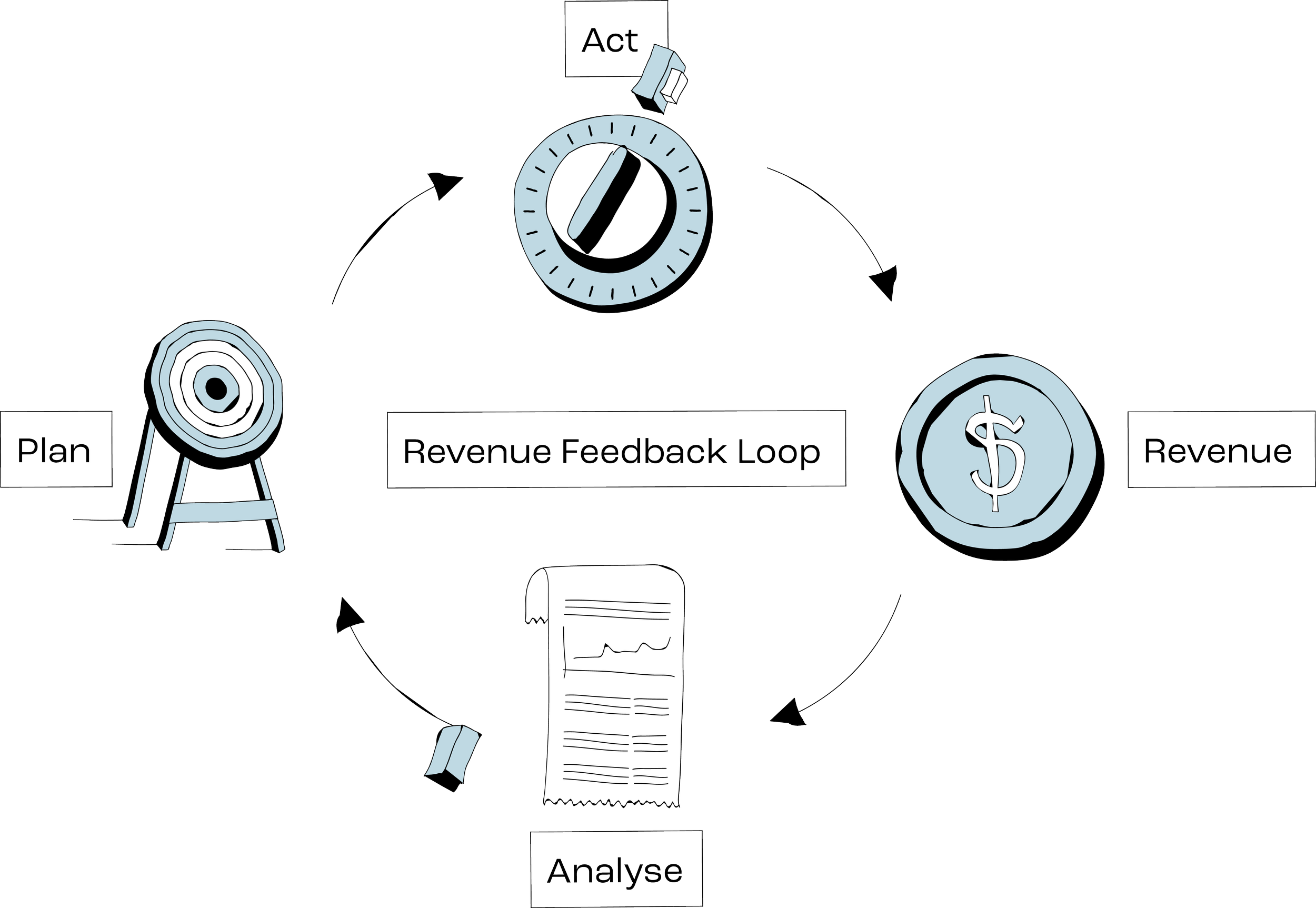
Report created pipeline separately from an open snapshot
A report of pipeline created during a period answers a different question from the value of opportunities still open today. Choose the view before calculating marketing’s share.
An example of created-pipeline reporting
Created pipeline: Three qualified opportunities enter the report in September at $60,000, $40,000, and $100,000, for a total of $200,000. Use their values at entry for this example.
Marketing-sourced share: If only the $60,000 opportunity is marketing-sourced, marketing’s share is $60,000 ÷ $200,000 = 30%.
Source breakdown: The $40,000 opportunity is sales-sourced and the $100,000 opportunity is partner-sourced. With these exclusive categories, the source totals sum to the same $200,000.
Suppose qualifying marketing activity appears in the $60,000 and $40,000 journeys. Marketing-influenced pipeline is $100,000, not an extra $100,000 to add to sourced pipeline. The measures overlap. Influenced totals exceed sourced totals only when the definitions and included opportunities produce that result.
If the $60,000 opportunity later closes, it remains part of September’s created-pipeline cohort but leaves the current open-pipeline snapshot. Report its won value separately, and state whether later amount changes restate the created-pipeline figure.
Add quality and cost to the source total
A large sourced total is not enough to justify more spend. Examine progression, won outcomes, customer fit, and relevant program costs. For example, $15,000 spent against $60,000 of sourced pipeline is $0.25 per pipeline dollar, not a profit return or proof of incremental pipeline.
How to grow valuable marketing-sourced pipeline
Growth means generating more qualified commercial opportunities that can become valuable customers. Changing the definition, inflating opportunity amounts, or relaxing qualification can raise the reported number without improving that outcome.
Separate acquisition activity from the outcome date when assessing performance. An opportunity created this month may follow marketing activity from earlier periods, so this month’s pipeline should not automatically be divided by this month’s campaign spend.
Make the offer relevant to the buyer
Create content and offers that address problems faced by suitable accounts. Educational material can support discovery, while a relevant evaluation or demo can help someone assess a specific purchase.
Judge the resulting inquiries by fit and progression, not just form volume. A direct request can be valuable, but a form label alone does not make the account qualified.
Help suitable inquiries progress
Give the team handling the inquiry the relevant context and a clear responsibility for responding. The response should help with the buyer’s actual question rather than merely move a record to the next stage.
Apply consistent qualification criteria and examine reasons for nonacceptance. Compare acquisition cohorts at equal ages, keeping unsuccessful and unfinished outcomes visible alongside the wins.
Evaluate paid activity against downstream outcomes
Relevant account audiences can support a campaign, but audience matching does not establish ad delivery, stakeholder reach, or commercial impact.
Supported conversion syncs can send downstream outcome signals to advertising platforms. Choose signals that fit the campaign objective and available data; they do not automatically align the platform’s attribution with your sourcing rule.
Dreamdata Activation supports audience and conversion workflows. Evaluate those workflows through delivery and downstream results, rather than using a match percentage as evidence that spend is efficient.
Use revenue attribution to examine how a chosen model distributes credit across eligible journey activity. Combine that view with sourcing, costs, and customer outcomes when forming the next investment decision or experiment.
FAQs
What is the difference between sourced, influenced, and attributed pipeline?
Sourced pipeline follows the origin classification rule. Influenced pipeline includes opportunities with qualifying activity and can overlap across channels or teams.
Attributed pipeline assigns credit under a model, which may divide an opportunity’s value among several interactions.
None of these measures alone proves the additional pipeline caused by a campaign.
Should marketing-sourced pipeline use lead source or opportunity source?
Calculate the pipeline total from qualified opportunities so that several contacts do not duplicate the same deal value. A lead-source field can be supporting evidence, but it should not automatically determine the opportunity’s classification.
Review the relevant account and purchase context, apply the agreed rule, and preserve a traceable history of corrections.