
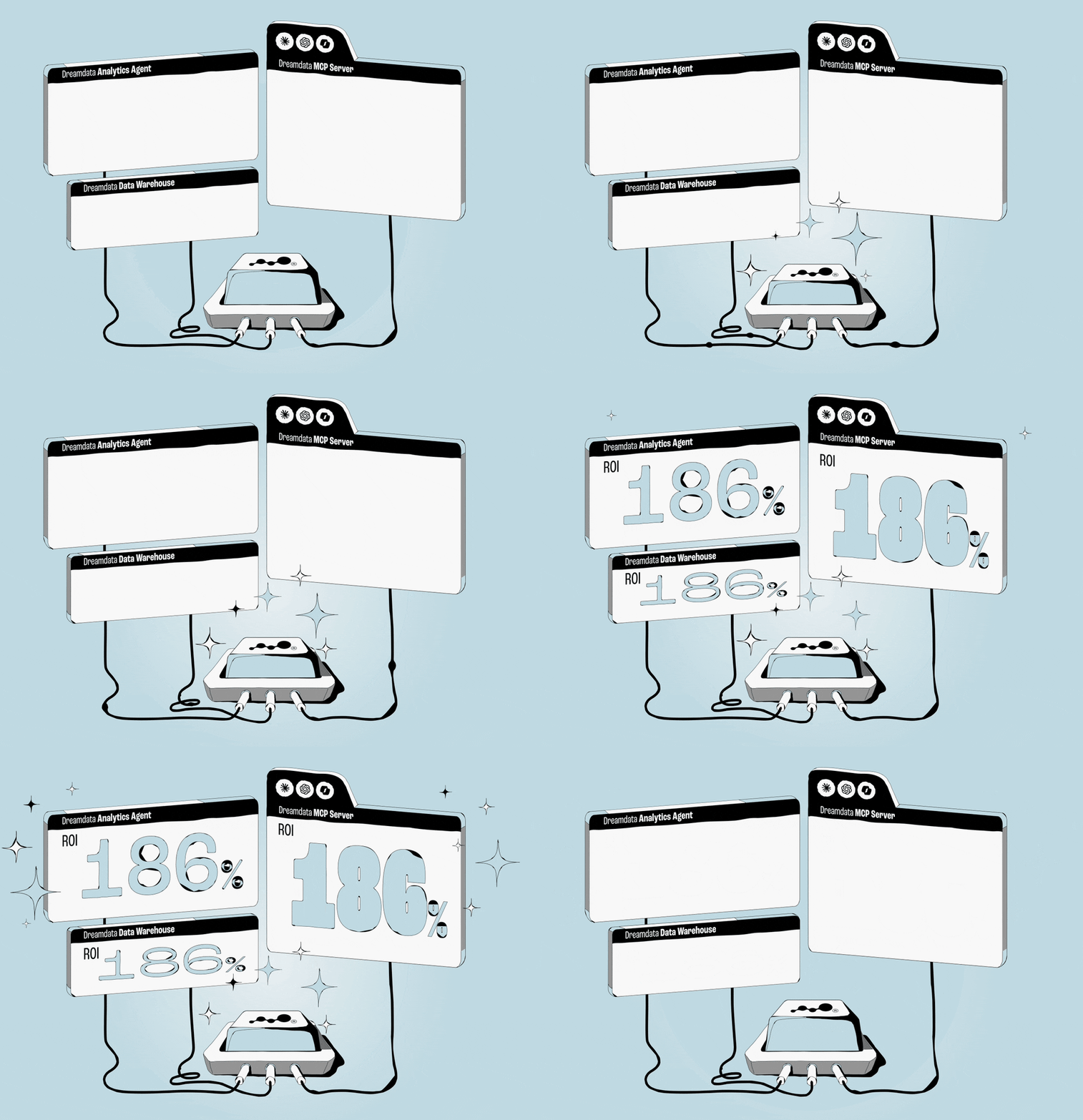
DREAMDATA AI
Answers you trust, from AI that knows your GTM
Use AI wherever you work. Get fast answers about marketing’s performance you can stand behind and know where to invest next. Built on the same account-based data model that ties every touchpoint to revenue, automatically.


DREAMDATA
Data Warehouse
Run your own custom agents with full control on our account-based model, not a raw data lake.
DREAMDATA
MCP Server
Bring Dreamdata into the LLM you already use, so you’re never starting from a guess.
Wherever your team works, Dreamdata AI meets you there


DREAMDATA
Analytics Agent
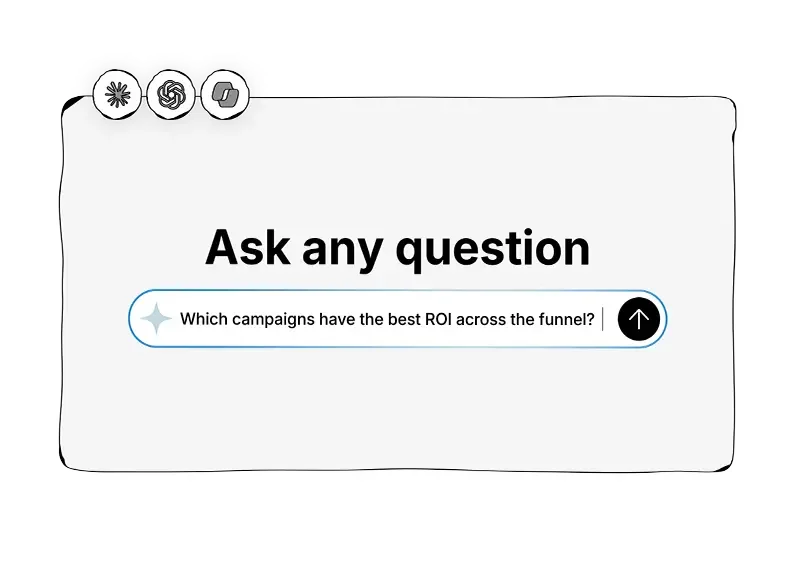
Ask in plain English and get a straight answer on what to do next, without waiting for Ops.

DREAMDATA
MCP Server
Bring Dreamdata into the LLM you already use, so you’re never starting from a guess.
DREAMDATA
Data Warehouse
Run your own custom agents with full control on our account-based model, not a raw data lake.
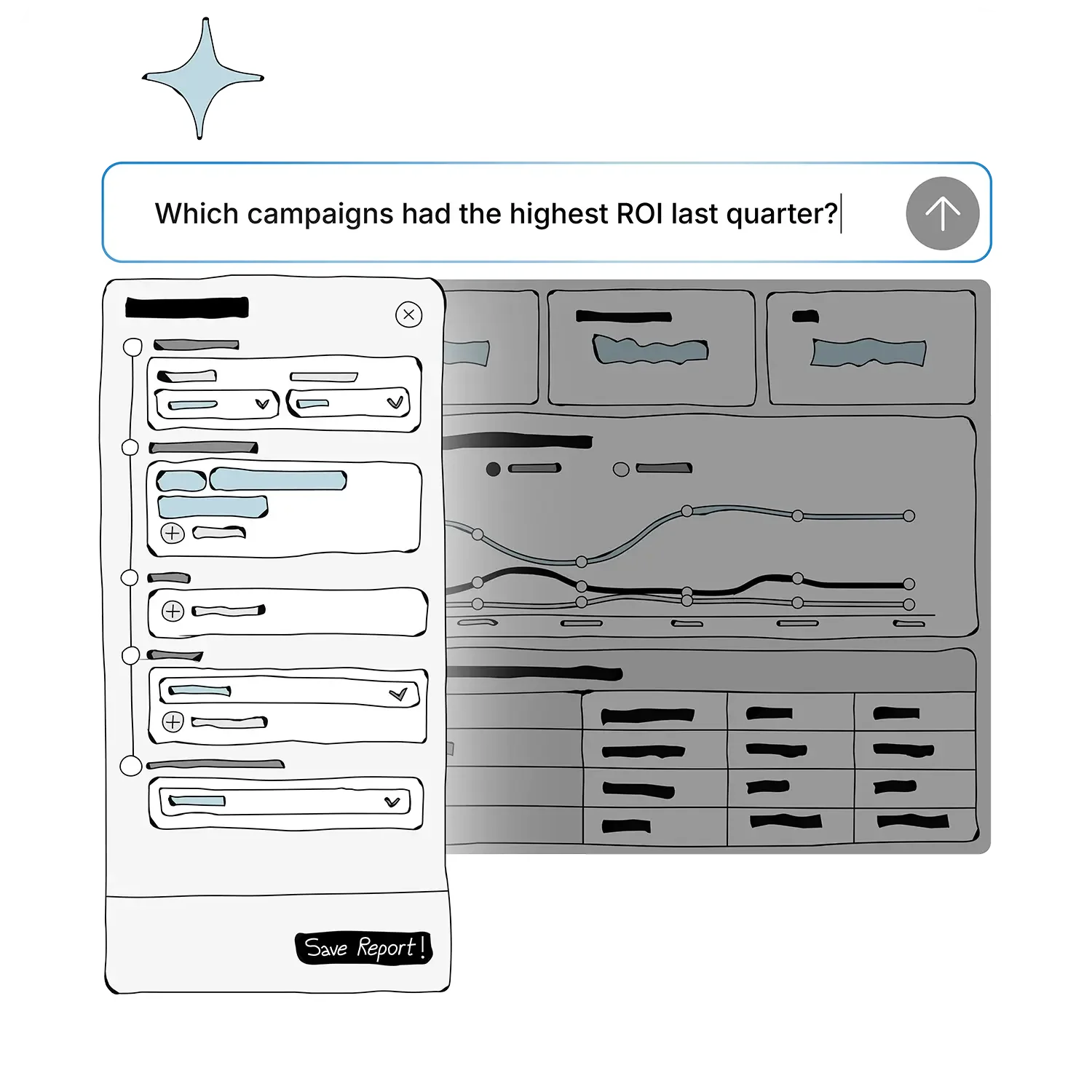
See Dreamdata AI in action
DREAMDATA
Analytics Agent
Ask in plain English and get a straight answer on what to do next, without waiting for Ops.
How Dreamdata AI gives you answers you can actually stand behind
Your agentic B2B attribution needs three things: your unique GTM context, consistent definitions and calculations, and a clear way to verify every output.

UNIQUE GTM CONTEXT
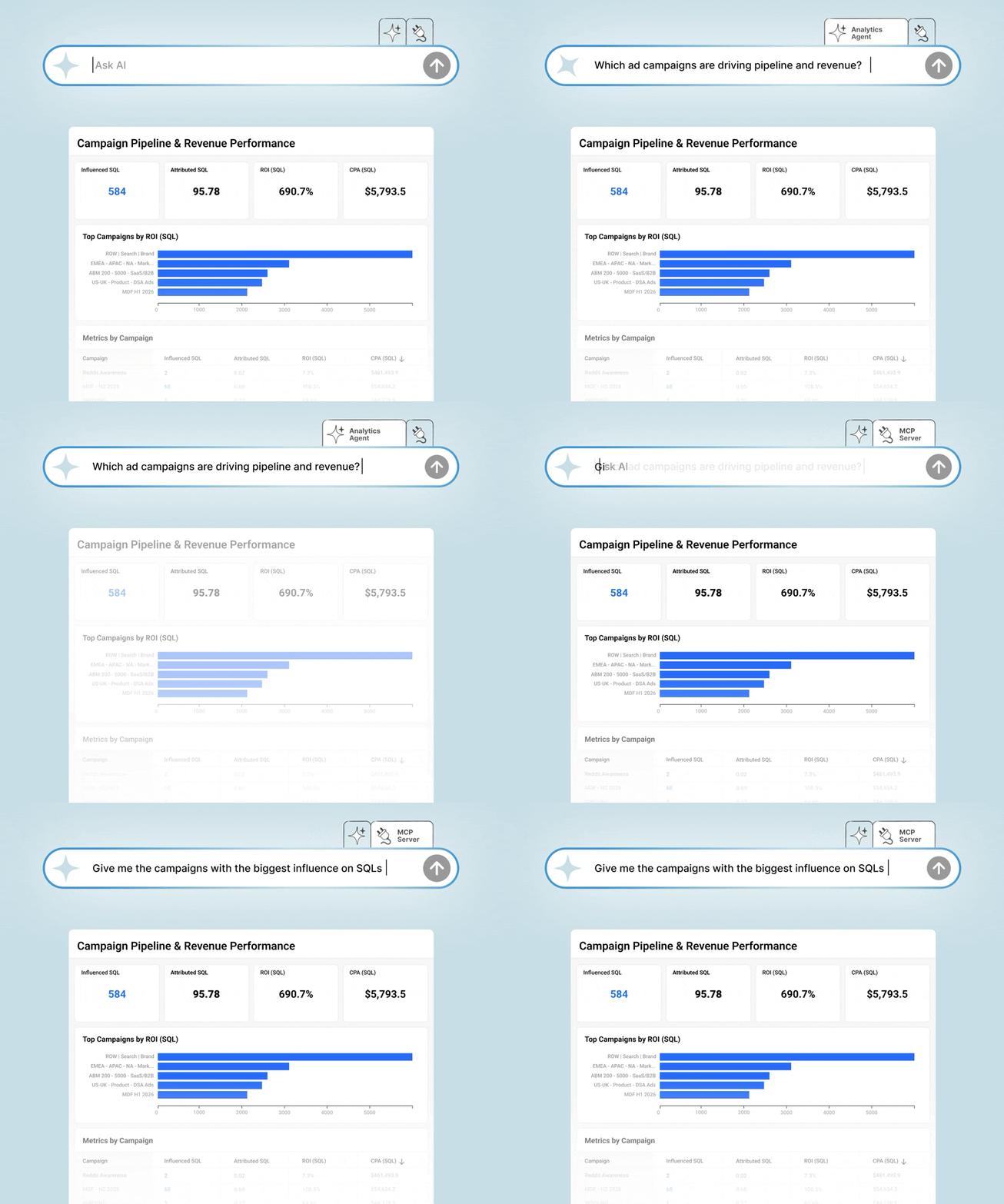
Get answers from your full B2B journey instantly
Every touchpoint is already organized by account and tied to revenue in Dreamdata’s account-based data model, so you get answers from your complete GTM data without rebuilding context with every prompt.
CONSISTENT DEFINITIONS & CALCULATIONS
Get the same answer, no matter who’s asking
The Analytics Agent and MCP Server use Dreamdata’s semantic layer to define every metric and how to analyze it. The answer’s the same no matter who asks or how.
With the Data Warehouse, the documented schema guides your agent to query the data correctly.
VERIFY AI OUTPUTS
Turn the black box into answers you can trust
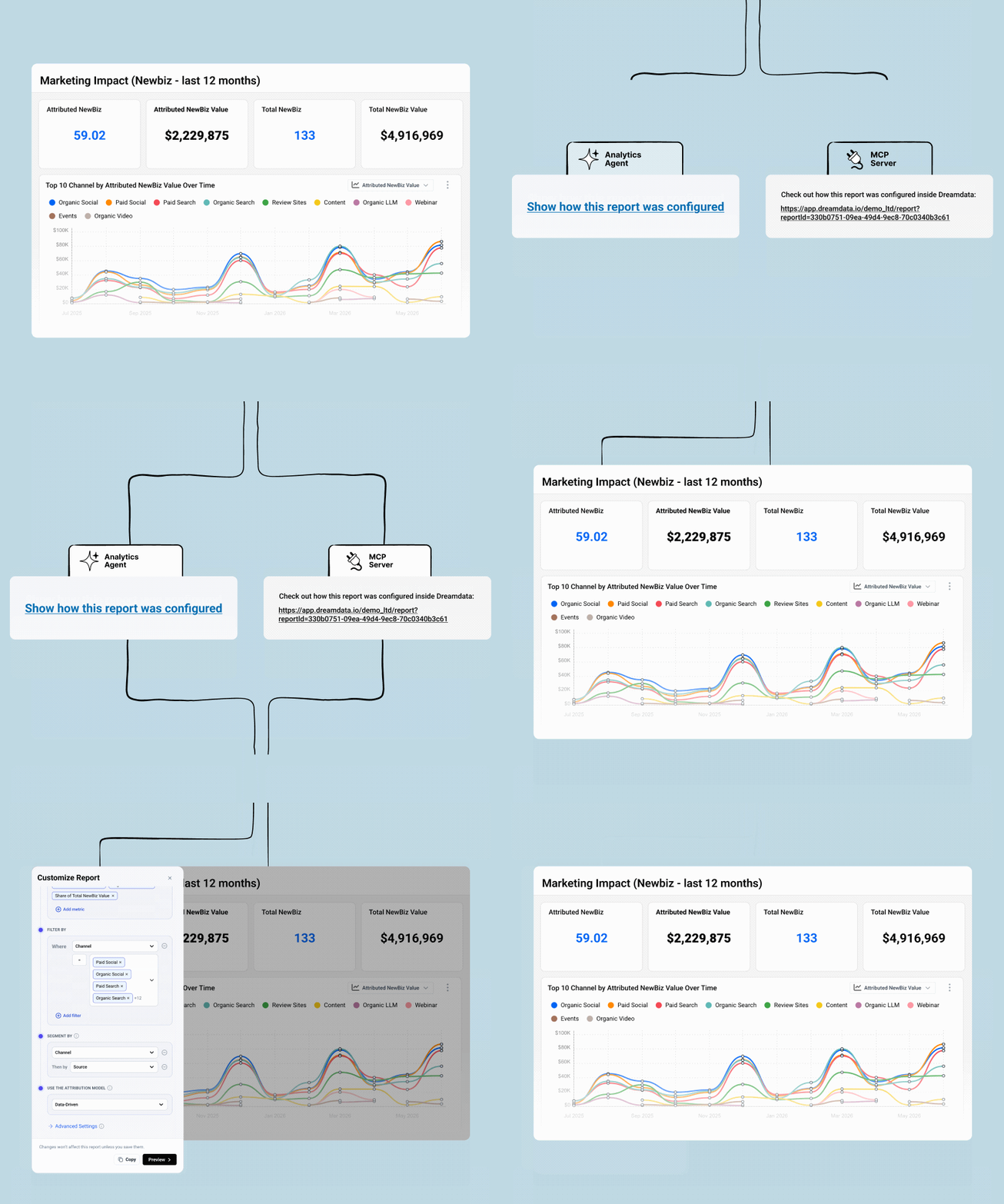
Check any answer instead of taking it on faith. Open the report configurator to see the metrics, filters, and attribution used by the Analytics Agent or MCP Server.
Use your Data Warehouse’s documented schema to verify what your own agent built.
Don’t just take our word for it
-
![]()
"I can't imagine using AI the way we do without Dreamdata. It ties all our go-to-market activities to revenue, and with the Claude connector we can connect anything to that data, like our sales call transcripts. We're answering questions we couldn't before."
Brian Austgen
VP of Growth Marketing & Operations
-
![]()
"The Analytics Agent is so clear about how it builds a report and what it is pulling in. That's made all the difference. I actually understand and trust what I'm looking at."
Lisa Doherty
Senior Marketing Manager
-
![]()
"AI usually loses me on the calculations, I've watched it confidently do the math and get it wrong. With the Analytics Agent I can build a report in seconds, and the numbers hold up."
Alex Knechtl
Director of Revenue Operations
-
![]()
"Within an instant the agent builds a report so I can see what drove pipeline in the past three months and that decides where I invest next."
Harjeet Singh
Sr Director Marketing & Demand Gen Operations
-
![]()
"With generic AI, I'm confident it'll give me a response. I'm just not confident that response is accurate. The Analytics Agent shows me exactly how the report was built, the filters, the model, the date range, so I can check it for myself. That's what earns my trust."
Jed Fudally
Director, Demand Generation






Dreamdata AI at a glance
Dreamdata
Analytics Agent
Ask a question, get a report and know what to do next
What it does
All answers draw on your complete, unified GTM data
Unique GTM context
Our semantic layer applies the same definitions and analysis every time
Consistent answers
Review the report configurator and drill into the details behind any number
Checking an answer
You need the highest level of trust for reporting
Best used when
The full experience - any incorrect answer is a bug we fix
What Dreamdata supports
Dreamdata
MCP Server
Build and analyze reports in the LLM you already use
What it does
All answers draw on your complete, unified GTM data
Unique GTM context
Our semantic layer applies the same definitions and analysis every time
Consistent answers
Review the report configurator inside Dreamdata
Verify answers
You already work in an LLM and need your GTM data there
Best used when
We guarantee the numbers; you’re responsible for how your LLM interprets them
What Dreamdata supports
Custom Agent on Dreamdata’s
Data Warehouse
Export the model to your warehouse for custom agents
What it does
All answers draw on your complete, unified GTM data
Unique GTM context
No semantic layer; the schema documentation guides your agent’s queries
Consistent answers
You own verification; the schema documentation is your source of truth
Checking an answer
You want maximum control and flexibility on your GTM data
Best used when
We deploy and confirm the warehouse works; custom agents are yours to manage
What Dreamdata supports
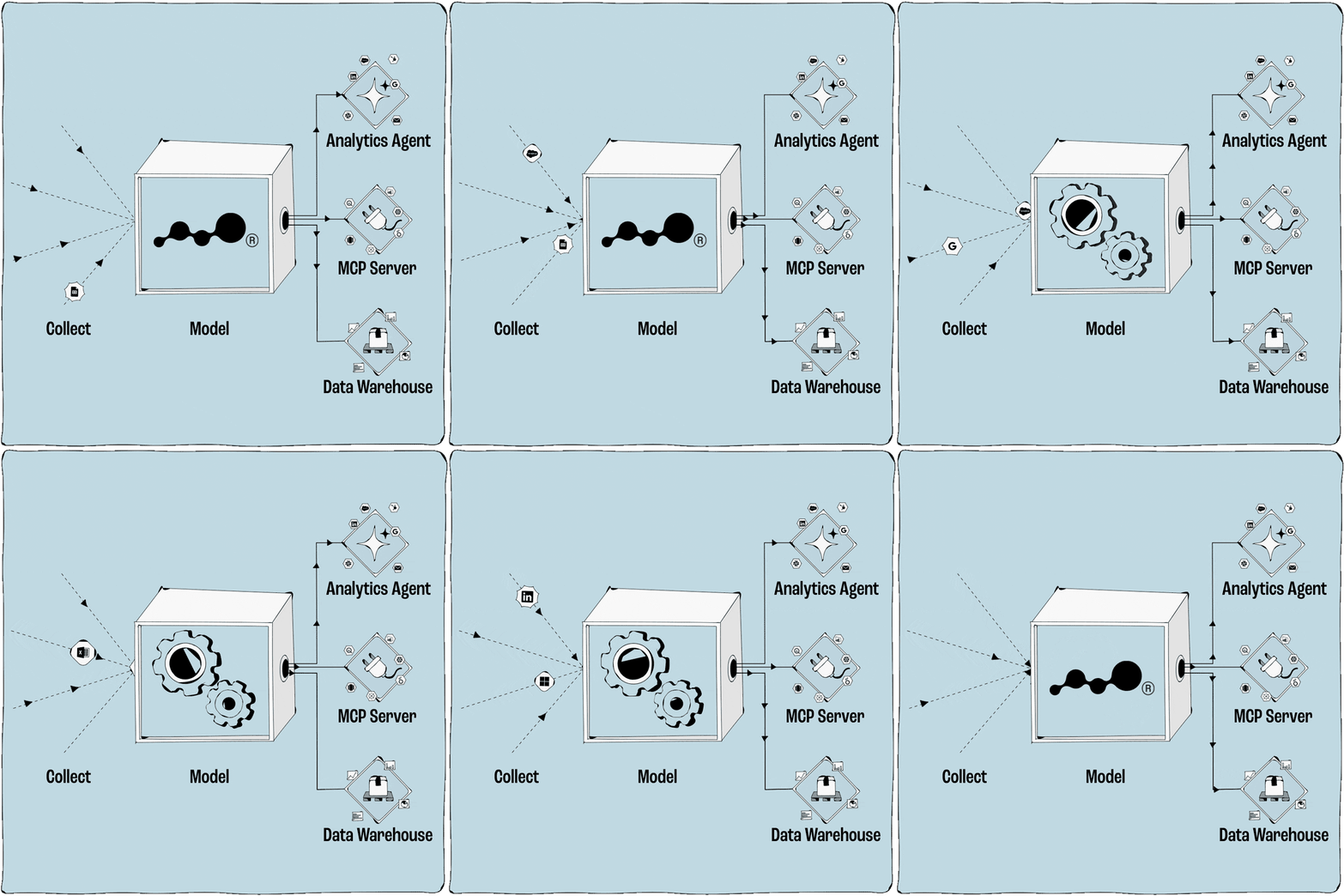
ACCOUNT-BASED DATA MODEL
AI is only as good as the data model feeding it. Ours is the best one.
It captures your whole B2B go-to-market, not a slice.
Unifies your entire GTM tech stack and ties it to revenue, giving you the most complete B2B customer journey map from first touch to closed-won.
Every number means the same thing.
The same structure applies to every customer journey, so a session, touchpoint, or closed deal means the same thing everywhere.
Built around your GTM, not a template
Define your touchpoints, pipeline stages, and attribution logic, then lock them in. So the model reflects your business and stays consistent.
SUCCESS STORIES
Why B2B Marketers love Dreamdata




Dreamdata AI FAQs
Find answers to the most common questions B2B marketers ask when evaluating Dreamdata AI.
-
For mid-market and enterprise teams with complex GTM motions, your GTM data is far too large to fit in an LLM's context window. They can never hold the full picture and you’ll just burn through cost.
Dreamdata unifies all your GTM data automatically, organized by account with every activity tied to revenue, so whichever AI you choose reads from a complete picture of your B2B journey.
-
You can use more than one.
For most teams, the Analytics Agent and MCP Server cover everything they need.The Agent is the fastest option and requires no additional setup. The MCP Server gives you the same experience in the LLM your team already uses. Both run on Dreamdata's account-based data model and semantic layer, so every answer draws on all your GTM data and produces the same number no matter who asks.
Teams needing maximum flexibility can export the account-based model to their own warehouse, join other datasets, and run their own agents. The schema includes built-in analytics and full documentation, so custom agents work from a structured model instead of raw data. Requires data engineering resources to set up and maintain.
-
With the Analytics Agent, open the report configurator and see exactly what the answer was built on: the metrics, filters, date range, segmentation, and attribution model.
With the MCP Server, open or save the report in Dreamdata and verify it in the configurator the same way as the Analytics Agent.
With the Data Warehouse, verification is yours to manage. But the data schema makes it straightforward: it's clean, structured, and fully documented with the analytics built into the schema, so it reads the model correctly and your team has a clear reference to verify what it built.
-
Trustworthy AI comes down to three things: it works from your unique GTM context, it defines and calculates every metric consistently, and it lets you verify the answer.
Dreamdata AI is built around all three.Unique GTM context: Every answer draws on the complete account-based data model, so the AI works from your whole journey, not a fragment.
Consistent definitions: In the Analytics Agent and MCP Server, Dreamdata’s semantic layer acts as a rulebook for what metrics mean and how to analyze them. In the Data Warehouse, the schema is fully documented, though how your agent applies it is up to you.
Verification: In the Analytics Agent, open the report configurator to see how the report was built - you can also drill into the contacts, companies, and deals behind any pipeline metric. In the MCP Server, open the same configurator inside Dreamdata. With the Data Warehouse, your team owns verification using the schema documentation as a source of truth.
-
When you use the Dreamdata Analytics Agent, your data is never used to train any AI models.
When you use the Dreamdata MCP Server or a custom agent on top of the Data Warehouse, data handling depends on the LLM and setup your team chooses. Dreamdata provides the data layer, but your organization controls the AI connected to it.
-
Not by us. The Analytics Agent has no per-question charge and no credits. It's included with Dreamdata, so if it's on your plan there's nothing extra to pay to use it.
For the MCP Server or a custom agent on the Data Warehouse, any token usage sits with you.