
How Data Makes You the Source of Truth in Your Market

TL;DR: Data storytelling fills the gap where product content doesn’t work, because buyers are trying to understand what’s happening in their market, not evaluate vendors. By using data to make sense of the market, you create content that people actually use and stay top of mind until they’re ready to buy.
The B2B buying journey now averages 272 days. Almost seven months!
For most of that time, buyers aren’t talking to sales. They’re trying to understand their market, what’s changing, what’s normal, and where they stand.
A lot of B2B content speaks to the seller, offering little that is useful to buyers during that window. Peter Walker, Head of Insights at Carta, points out that product-led content doesn’t explain what’s happening in the market. Proprietary data, however, gives you a way to speak to your audience during the part of the customer journey when they’re not evaluating vendors.
In a recent episode of the Attributed Podcast, Peter described how to build a content engine around data storytelling: what it takes, where to start, and why it changes what content can actually do for your business.
You can also listen to the full conversation with Peter here.
Buyers Can Spot the Pitch Instantly
B2B buyers have learned to ignore anything that sounds like it’s written for the seller.
When content starts with what the company wants to say, it almost always ends up being about the company: the insight conveniently validates the product, the benchmark just happens to highlight the problem the tool solves, the thought leadership piece ends with a “book a demo” CTA.
Buyers aren’t naive. They’ve learned to pattern-match this and scroll straight past it.
A lot of marketing is often “buy us, here’s why we’re better”, Peter points out. The alternative is using data to talk about your customers’ world rather than your place in it. Not “here’s why our software is great,” but “here’s what’s actually happening in your market right now.”
That shift – from company-out to market-in – is what makes content worth paying attention to. And data is what makes that possible.
When You Have Data, You Stop Guessing
When you’re working from a data asset, the creative problem changes entirely. You’re not inventing angles, you’re interpreting evidence. The story is already in the numbers and your job is to find it and make it digestible.
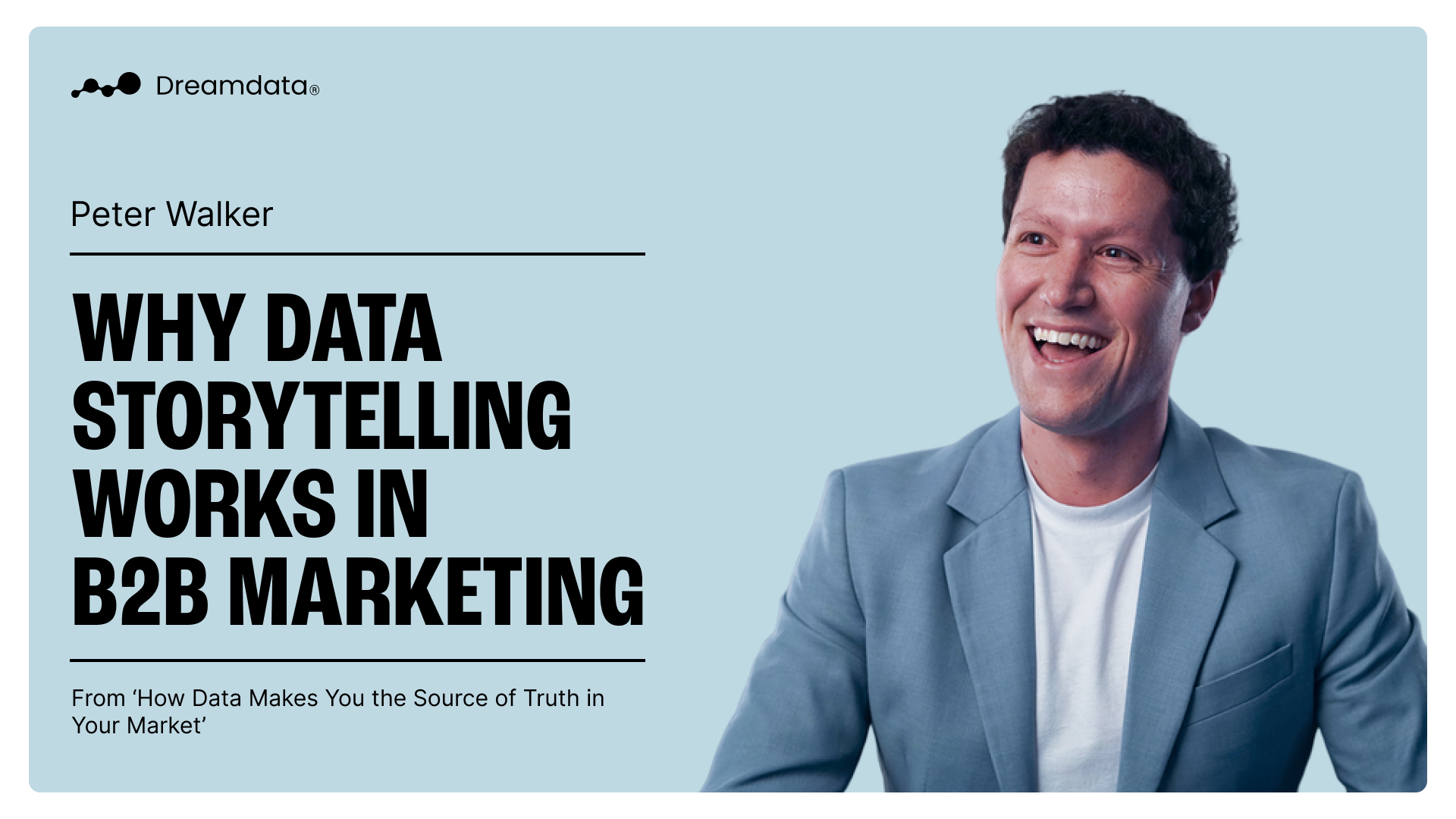
That matters because, as Peter explains, “everyone is spouting claims that are either completely evidenceless or it just kind of seems like they’re making wild assumptions off of a tiny set of numbers.” Proprietary data gives you a view into what’s actually happening in your market, so content can speak to that rather than just your product.
It gives people something they can actually use rather than another LinkedIn hot take about “the future of B2B sales”.
The second thing data does is keep you relevant with the 95% of buyers who aren’t anywhere near a purchasing decision.
For most of their journey, your audience isn’t just evaluating vendors, they’re trying to understand what’s normal in their world and where they stand. Peter describes it as “capturing the not-in-market mind share”, becoming the source of truth for people who aren’t ready to buy yet, so that when they are, you’re the only brand that comes to mind.
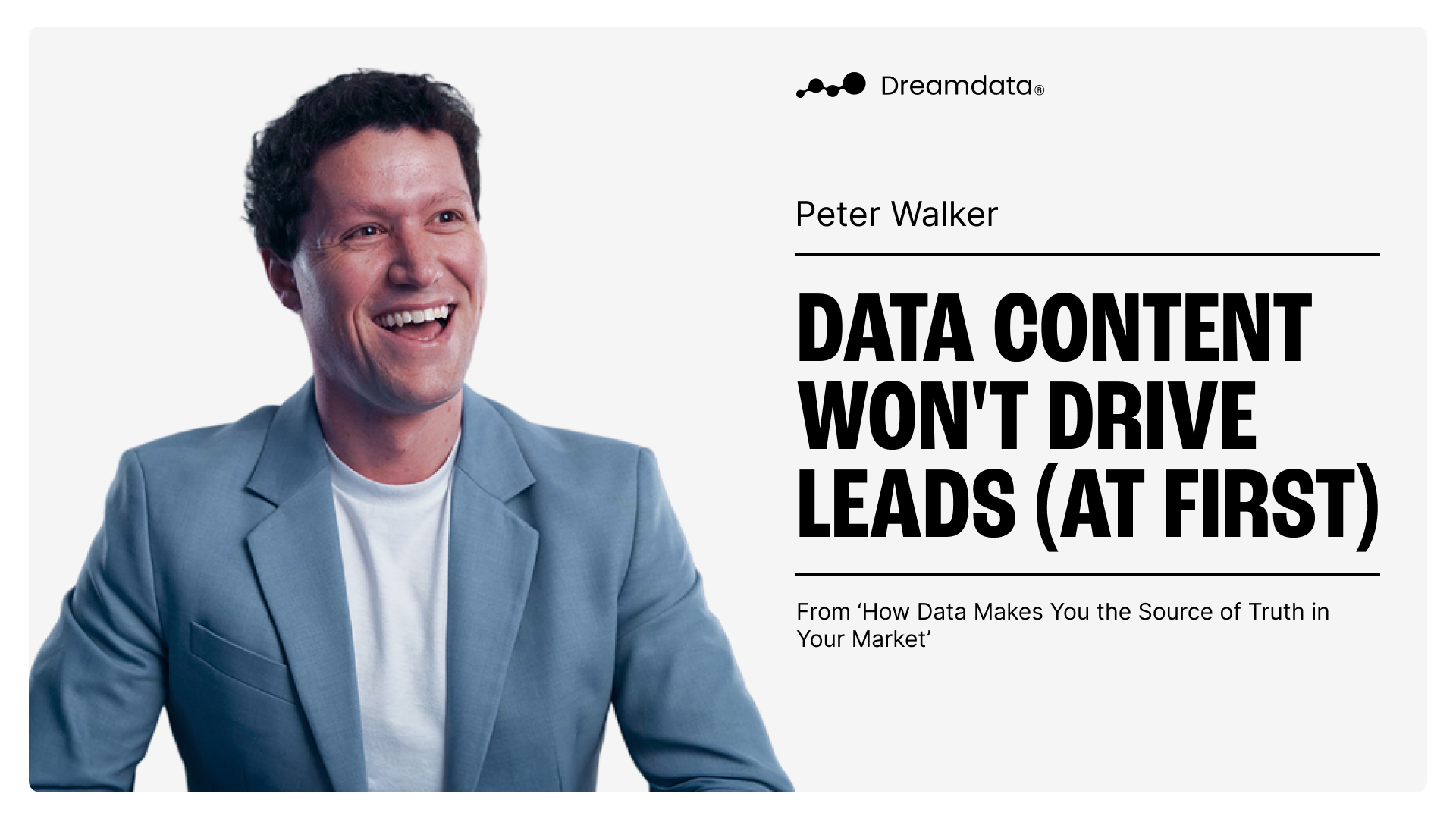
And the longer you show up with something genuinely useful, the harder that position is for anyone else to take.
Data is a way to stay relevant and become a source of truth without only talking about yourself. It gives you a reason to show up consistently and builds the kind of trust that carries into the buying decision when the window finally opens.
Most Companies Have More Data Than They Think
The common pushback is “that works for data-rich companies, but we’re not big enough.”
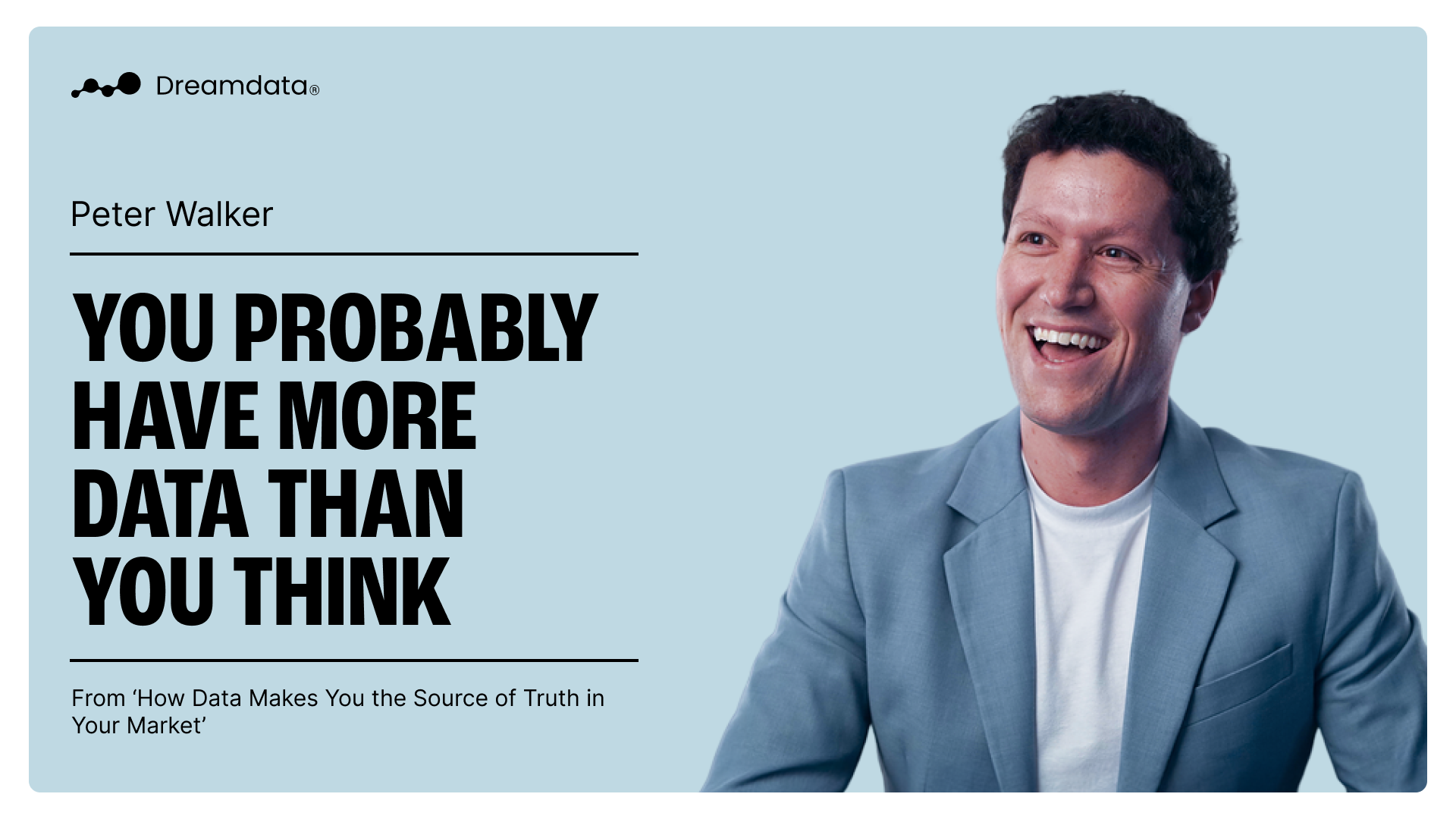
Peter’s response is direct: “very often, any company of a significant size will have a data asset that’s worth exploring at least somewhat.” Think customer behavior, transaction patterns, usage trends, signals of what’s actually happening in your market. The constraint is rarely zero data, it’s not looking closely at what you already have.
If your own data is genuinely too thin, there’s still a way to run with this approach.
Peter suggests thinking of yourself as a curator: synthesizing the industry reports your audience doesn’t have time to read, pulling together benchmarks scattered across five different sources, presenting them in one place, and making sense of what they mean for your audience.
“Most people aren’t going to read the big McKinsey reports,” he notes. “You can synthesize them, put a little bit of your own spin on it, and put it out as interesting information.”
Someone needs to do that work. And if it’s you, you shape how the market understands itself.
Finding the Story, Not Forcing It
So, if this approach works so well, why doesn’t more B2B content look like this?
You’re not starting with a message and shaping everything around it. You’re starting with the data and trying to understand what’s actually there. As Peter explains, “[you] have evidence to work off of and [your] job is to craft it into compelling stories rather than trying to imagine a net new thing every couple of months.”
That removes a lot of control. Because you don’t get to decide the story upfront, you have to find it.
Some things won’t turn into strong stories, some charts won’t land, and some angles won’t be that interesting to your audience once you look closer.
The instinct is to shape the output so it supports a message – make it sharper, cleaner, and more aligned with what you want to say. Once you start forcing the story, you’re back to the same pattern: content shaped around a message, just with a chart attached.
And that’s exactly what buyers have learned to ignore.
The value only holds if the work is grounded in something real.
Start With One Chart, Not One Report
Once you have a data asset, the next challenge is trying to do too much with it too soon.
The instinct when starting a data storytelling program is to go big. Build the definitive state-of-the-industry report. Spend three months on it, make it comprehensive, then release it and hope it lands.
The big report approach is ambitious, but it’s out of sequence. You’re investing months of effort before you have any signal on what your audience actually cares about.
Peter’s advice is the opposite: don’t.
“Start with one chart that looks good and put it out on social. Stop trying to build a big report up front. You can waste a lot of time and get no downloads.”
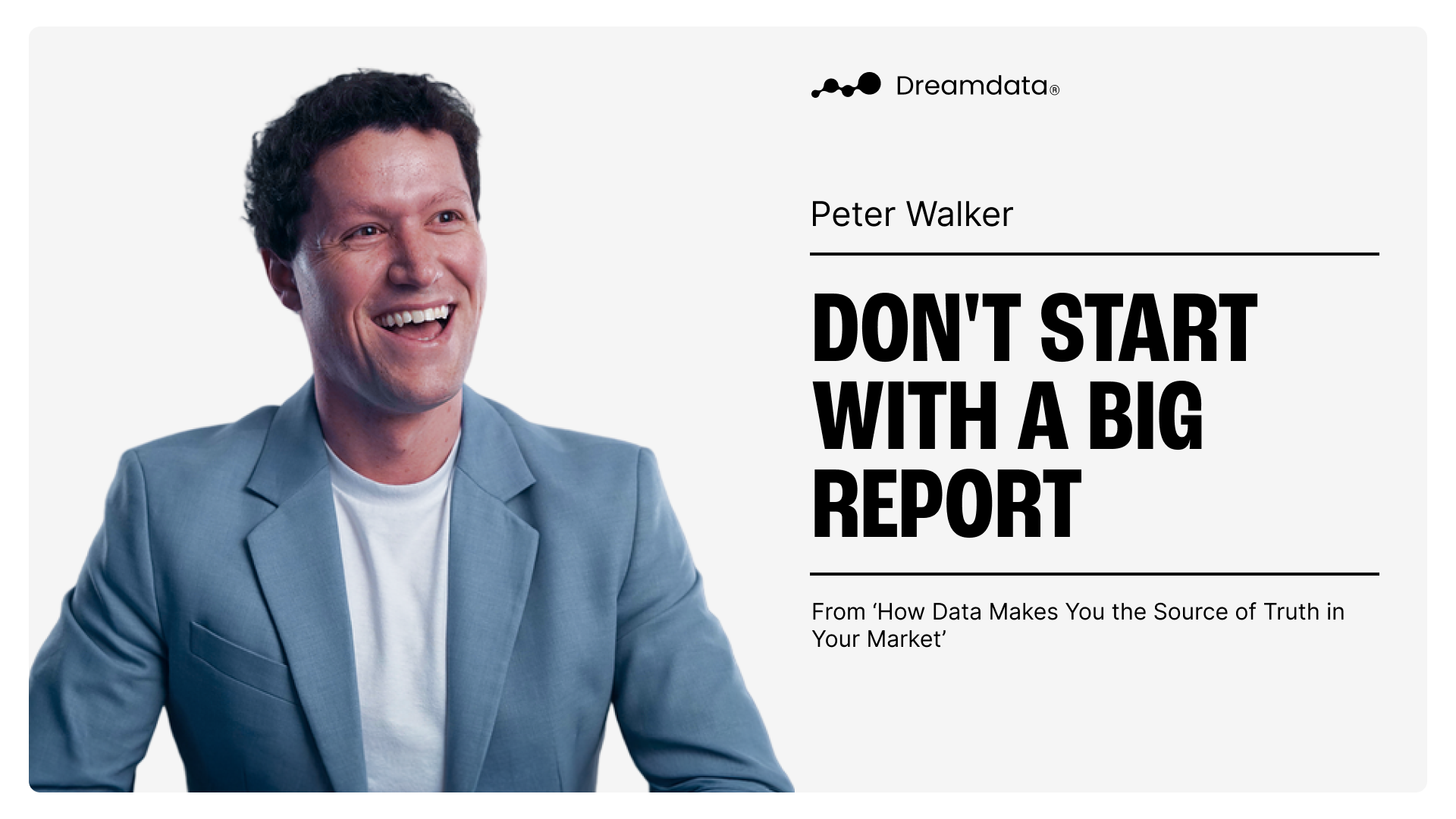
He calls this the “atomic unit”, the smallest publishable piece of work. One chart, posted publicly, before you’ve built anything around it. The goal is to learn what actually reflects your audience’s world. “You get so much better releasing two or three times a week than you would building a big report and, fingers crossed, it hits.”
The other thing that happens when you ship small and often is that your audience starts telling you what they want. Comments, reactions, shares, and DMs about what reflects their reality and what doesn’t. It’s that feedback loop that helps you figure out which topics are worth going deeper on and which charts deserve to become a newsletter, a webinar, or a full report.
You respond to what reflects your audience’s world, rather than guessing what to say.
One other thing worth noting: if the goal is to become a source of truth in your market, it’s much easier to do that through a person than a logo. A named individual with a point of view builds trust in a way a brand handle doesn’t.
Conclusion
Effective data-led content speaks to your customers about their world, not your place in it.
For most of the buying journey, they’re trying to understand what’s happening around them, what’s changing, what’s normal, and how they compare. Data storytelling gives you a way to speak to that reality, helping them make sense of where they stand.
It becomes useful. And as Peter explains, usefulness is what compounds: “becoming the source of truth for people that are not in market … eventually they look up and you’re the only brand that even comes to mind because they’ve been reading so much of your stuff they’ve actually found value in it.”
That’s what carries through a 272 day buying journey.
About the Speaker
Peter Walker is the Head of Insights at Carta, where he leads research and data storytelling across the private capital ecosystem. His work focuses on turning large-scale data into clear narratives that help founders, investors, and operators understand what’s actually happening in the market.
