
Revenue Intelligence Explained for B2B Marketers
Library > Revenue Intelligence Explained
Written by Stephanie Dean
Published on 23 October 2026
What is revenue intelligence?
Revenue intelligence combines customer interaction data with commercial records to help teams understand deal progress, risks, and revenue performance. Common applications include reviewing opportunities, analyzing sales conversations, and supporting forecasts.
For a B2B marketer, the value is practical: you can understand the questions buyers raise after they enter a sales conversation and use that context to improve messaging, evaluation content, and support for active accounts.
Business intelligence (BI) provides broader reporting and analysis across business data. Revenue intelligence often packages analysis around sales and revenue workflows; the categories can overlap.
Sales intelligence often focuses on information about prospects, companies, and buying signals. Revenue intelligence commonly adds analysis of interactions and commercial progress, although product capabilities vary.
Start with the problem you need to solve. Explaining a slipping forecast, identifying recurring objections, and allocating campaign budget require different data and analysis. The category name alone does not tell you whether a product addresses each one.
How revenue intelligence turns records into useful context
A typical workflow connects CRM records with available customer interactions, organizes them around accounts or opportunities, and surfaces patterns for review. The quality of the output depends on both the captured activity and the business records.
Connect the relevant sources
CRM records provide contacts, accounts, opportunities, stages, amounts, and dates. Interaction systems may add emails, meetings, or call content. Depending on the product and use case, additional sources can provide context for customer adoption or renewal.
Capture and organize activity
Automatic capture can reduce manual logging, but the records still need to be associated with the right people and opportunities. A meeting linked to the wrong deal can make a timeline look active without showing relevant progress. Check which events are actually available and how they are linked.
Analyze patterns and changes
Analysis may highlight a change in engagement, an unanswered objection, or an opportunity with little recent activity. Use the signal to decide what to investigate. Low recorded activity can reflect a real delay, a tracking gap, or a conversation happening elsewhere.
Bring the evidence into a decision
Useful outputs make the next discussion more specific: which requirement is unresolved, who needs to be involved, or why a close date changed. The value comes from helping the team address the issue, rather than simply adding a score to the deal.
When evaluating the available data, ask:
Which customer interactions are captured, and which require manual context?
Can you inspect the underlying activity behind a summary or risk flag?
Are contacts and activities associated with the correct account and opportunity?
Which CRM fields and dates does the analysis depend on, and how current are they?
For example, a deal flagged for low engagement may already have an agreed procurement review. The rep's context can explain the signal and prevent an unnecessary escalation. The combined view is more useful than either the activity score or a brief CRM note alone.
Four uses that matter to Marketing and Sales
Revenue intelligence can give marketers a closer view of the buying conversations behind pipeline numbers. Use that evidence to address a specific need, with Sales involved in deciding what is appropriate for an active opportunity.
1. Understand stalled evaluations
Review the recorded discussion and opportunity history to find what buyers still need. A technical requirement, missing approval, or unclear business case calls for different support.
If several evaluations stall on the same question, Marketing can improve the relevant explanation, customer example, or validation material. That turns a recurring sales objection into a concrete content priority.
2. Support forecast discussions
Some revenue intelligence products provide forecasting and pipeline analysis. Compare the estimate with the opportunity evidence and the team's judgment, then examine material differences instead of assuming a prediction is certain.
Marketing can use this context when discussing pipeline quality. Campaigns associated with large opportunity values may still produce deals with unresolved fit or approval issues. Those details help explain why pipeline and won revenue develop differently.
3. Make follow-up more relevant
Interaction history can show which topics buyers have already discussed and which questions remain open. It helps teams avoid repeating a general pitch when the account needs a specific answer.
For example, if Finance needs to understand how a proposed solution reports value, provide a clear worked example or evaluation resource. Coordinate delivery with the account owner so the material supports the conversation.
4. Learn from customer conversations
Where relevant post-sale interactions and records are available, analyze recurring adoption questions, renewal concerns, or expansion needs. The right response might be training, better onboarding content, or a product discussion.
Confirm the customer's situation before treating a pattern as a churn prediction.
Choose a use case with a clear owner and outcome:
Recurring evaluation question: Marketing and Sales improve the supporting content and review whether later buyers still encounter the same gap.
Unexplained forecast movement: Sales and RevOps inspect the opportunity changes and underlying interactions.
Customer adoption question: Customer Success and Marketing improve the relevant guidance and assess whether customers can complete the intended task.
Define what success would look like before adding more alerts. A useful signal should help someone make a better decision or resolve a specific issue.
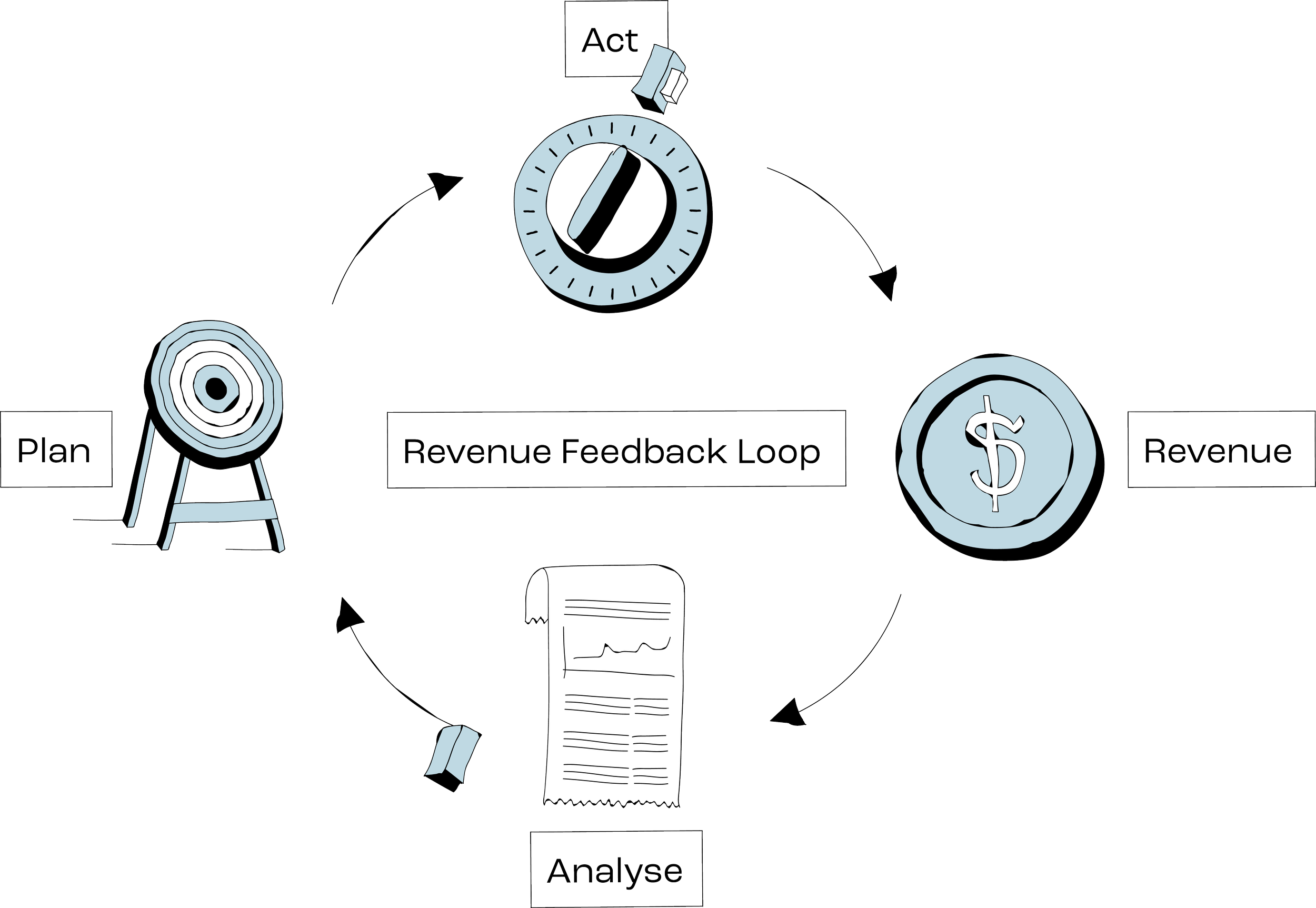
How revenue intelligence relates to attribution
Revenue intelligence and attribution address related questions with different methods. Deal analysis can explain what is happening in active opportunities. Attribution distributes credit for an outcome across eligible recorded interactions.
For a campaign budget decision, you also need activity and costs from the relevant channels, including earlier research where available. An opportunity timeline containing only sales interactions cannot, by itself, explain the role of every marketing campaign.
Ask whether your reporting supports both views:
Deal and revenue performance: which opportunities progress, what questions remain, and what outcomes are expected?
Campaign performance: which recorded interactions receive credit for pipeline or won deals, under which model, and at what cost?
A product may support elements of both. Evaluate the underlying sources, definitions, and calculations rather than assuming a fixed boundary between software categories.
Where Dreamdata fits
For B2B marketers, Dreamdata connects marketing and sales activity with account-level business outcomes so you can examine customer journeys and compare attribution results.
Connect campaign analysis with buying context
Use deal context to understand evaluation questions, stakeholder needs, and the progress of the opportunities behind a campaign total.
Use Dreamdata's account-based data model to connect contacts, activity, companies, and outcomes across connected sources. Attribution then allocates value under the selected model; it does not turn every recorded interaction into proof of causal impact.
Dreamdata's Activation supports audience and conversion syncing to supported ad platforms. Relevant account activity or business milestones can inform advertising, with matching, delivery, and commercial outcomes evaluated separately.
For example, review a webinar program from two perspectives:
Marketing: inspect the accounts and opportunities associated with the webinar, allocated pipeline or won-deal value, and program cost.
Sales: examine what those buyers asked afterward and whether an unresolved requirement repeatedly slowed their evaluations.
Together, those views can suggest a specific improvement: change who the webinar attracts, answer a missing question, or support the next evaluation step. Measure whether that change improves the intended outcome.
FAQs
Is revenue intelligence the same as revenue operations?
No. Revenue operations (RevOps) is the function that aligns processes, data, and reporting across revenue-related teams.
Revenue intelligence describes technology and analysis that can support that work. RevOps may own its setup and definitions, while Sales and Marketing use the resulting information.
Do I need revenue intelligence if I already have attribution?
It depends on the gap you need to fill. Attribution helps analyze credit across recorded interactions; deal inspection or conversation analysis may require different capabilities.
Check what your existing tools already provide and evaluate any additional product against a specific use case using representative data.