
B2B Marketing Trends, Tactics, and Predictions for 2026
TL;DR: B2B marketing in 2026 rewards focus over volume. People are outperforming logos, search still captures high-intent demand, curated events are replacing industry trade shows, and clarity of ICP and positioning underpins everything else.
To most, marketing in 2025 felt like everything, everywhere, all at once.
Speed and adaptability were the greatest priorities, with teams constantly testing, learning, and iterating in real time.
And this is because the buyer's journey has changed. Audiences are more critical of the content they’re presented and paid channels that have worked for years are getting more expensive and competitive.
So, what can we expect in 2026? More of the same?
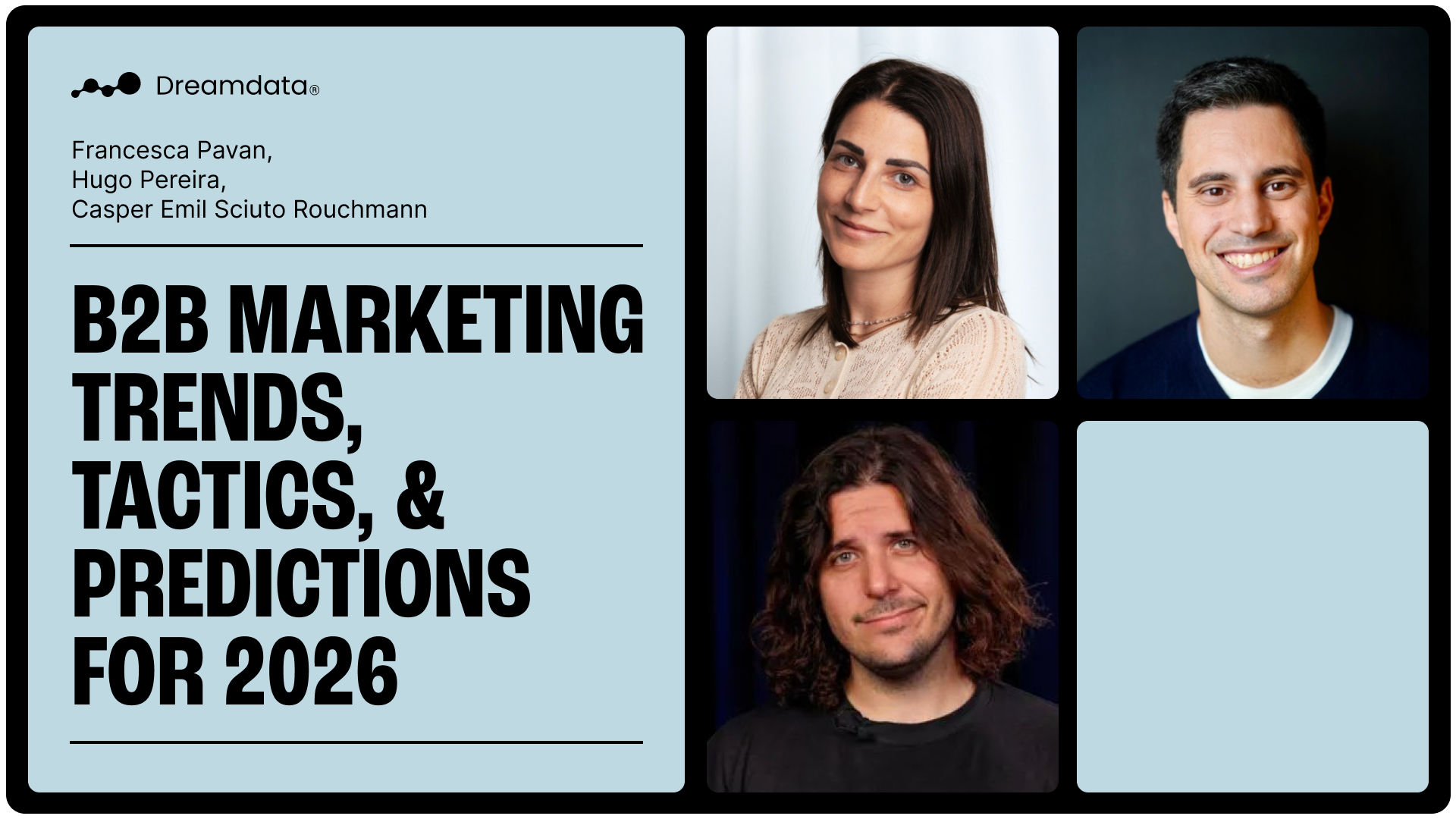
On the Attributed Podcast, we brought a panel of marketing leaders – Francesca Pavan (Demand Gen Director at Legora), Casper Emil Sciuto Rouchmann (Founder at SparkForce), and Hugo Pereira, Fractional CMO at Frends iPaaS – together to discuss their 2026 predictions and the trends they see shaping B2B marketing this year.
Listen to the entire conversation here.
Trend 1: Moving from industry tradeshows to curated events
For years, B2B growth meant renting attention at scale. Buying space in places your brand doesn’t control, like trade shows and third-party channels, in exchange for access to potential buyers.
That model is starting to crack. And it’s most clearly showing up in how teams think about events.
Across the panel, there was a clear shift toward prioritizing owned environments, places where teams control what the narrative is, how it’s presented, and who is seeing it.
“I think a bold decision in 2026 is to not participate in huge trade shows,” Francesca explains. “Instead, decide to turn that interest into your own events where you can control the narrative, the topics, and the guest speakers.”
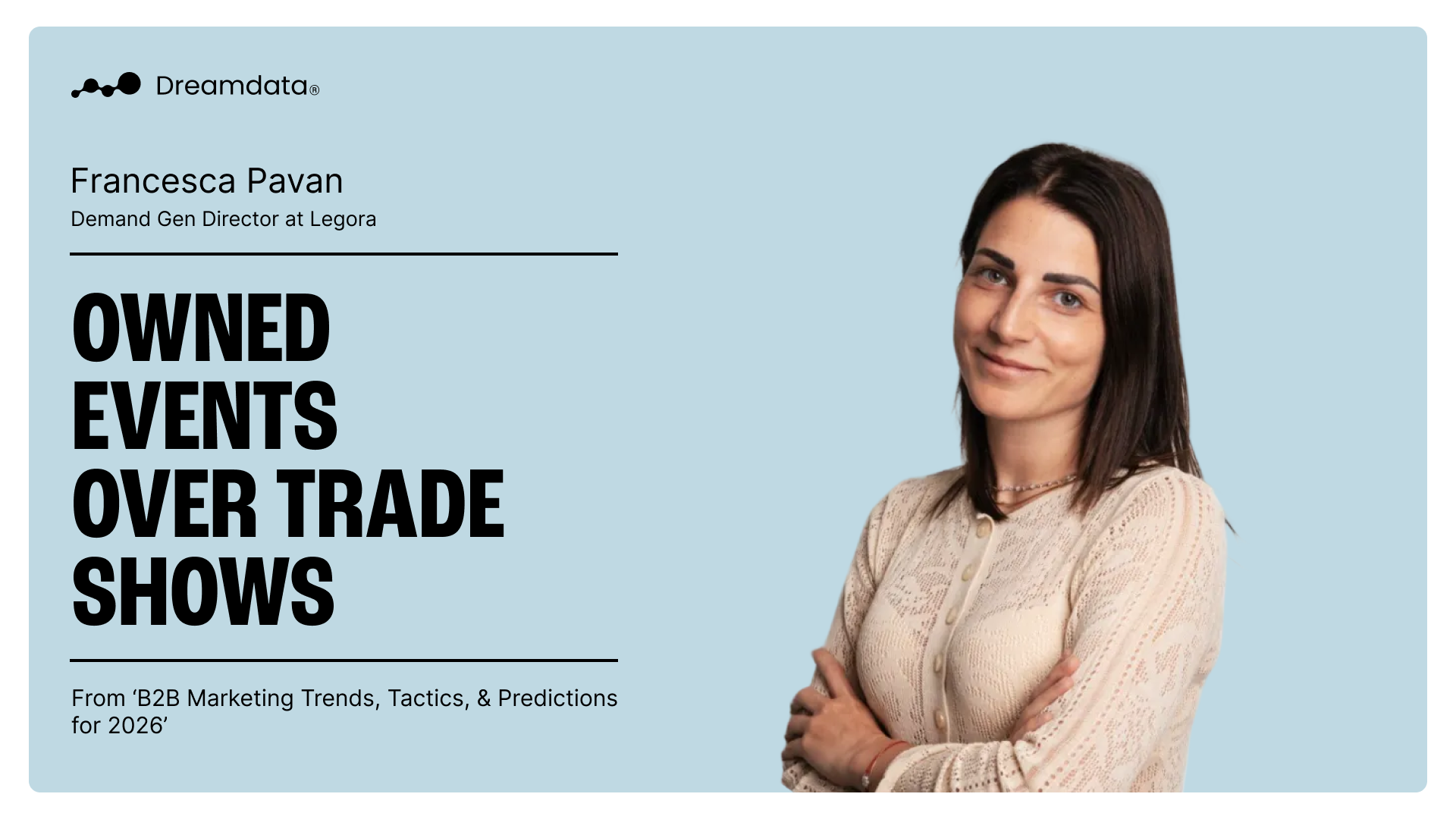
Rather than attending industry conferences with broad audiences, the panel described a shift toward smaller, more intentional formats: curated dinners, invite-only sessions, or private events where the guest list matters more than the foot traffic.
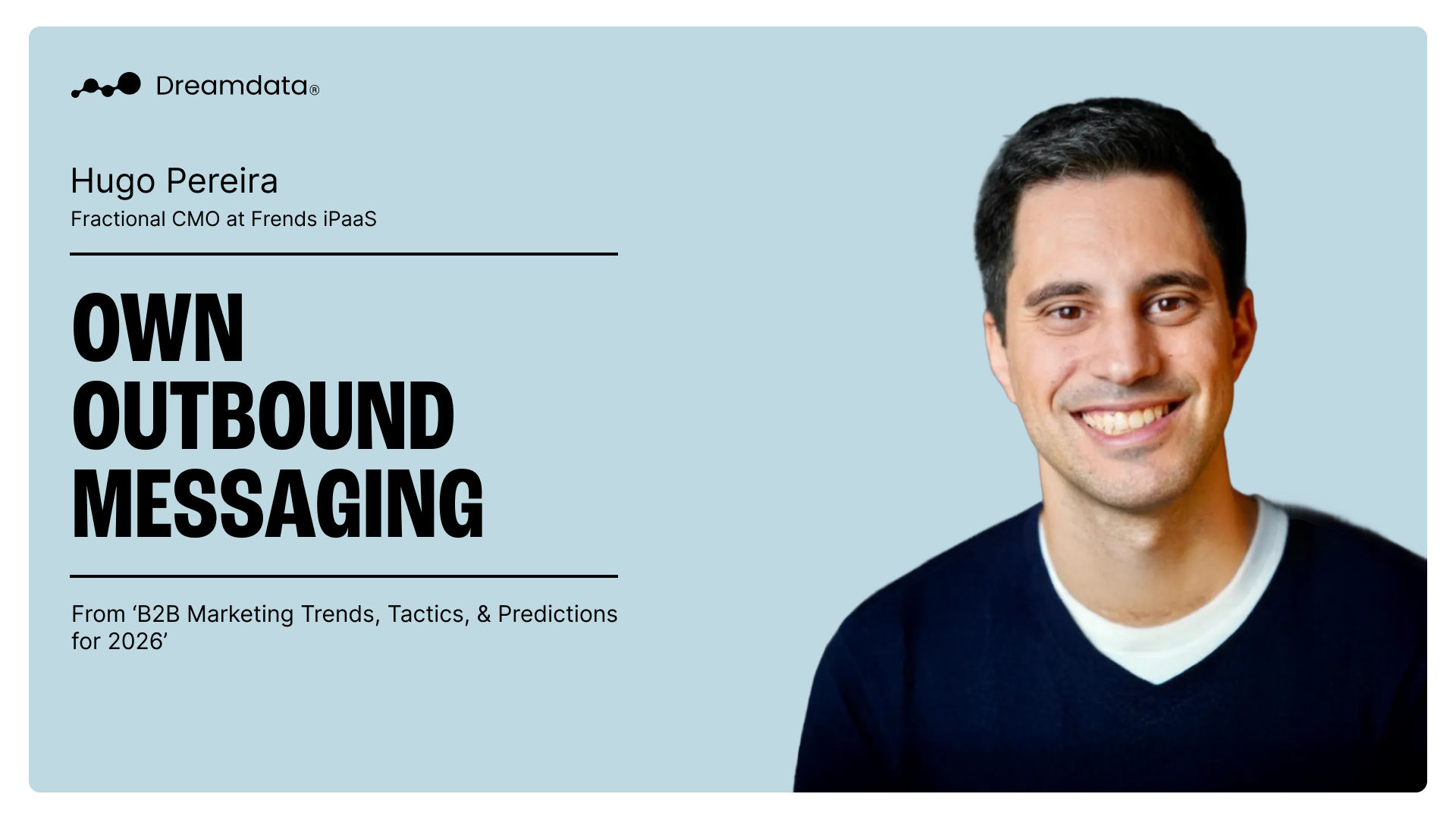
Hugo echoed this approach: “Explore hosting your own intimate events because the budget is much more simplified, you can test things out and move faster.”
When you own the room, you’re no longer competing for attention; instead, you’re creating context.
The same thinking is also happening across channels. Tailored newsletters, podcasts, and communities are becoming preferred channels because they offer direct access to a specific audience without fighting for relevance in crowded feeds.

Trend 2: Thought leadership is the new paid media
Paid media will always be relevant, but who it’s coming from is changing.
A consistent theme throughout the conversation was the performance gap between brand-led ads and people-led distribution. Logos and company profiles still matter, but they’re no longer doing all of the work by themselves.
In 2026, the panel sees more teams putting budget behind the voices buyers actually trust: founders, operators, and subject matter experts. Not polished brand narratives, but authentic, informed perspectives from people who actually do the work.
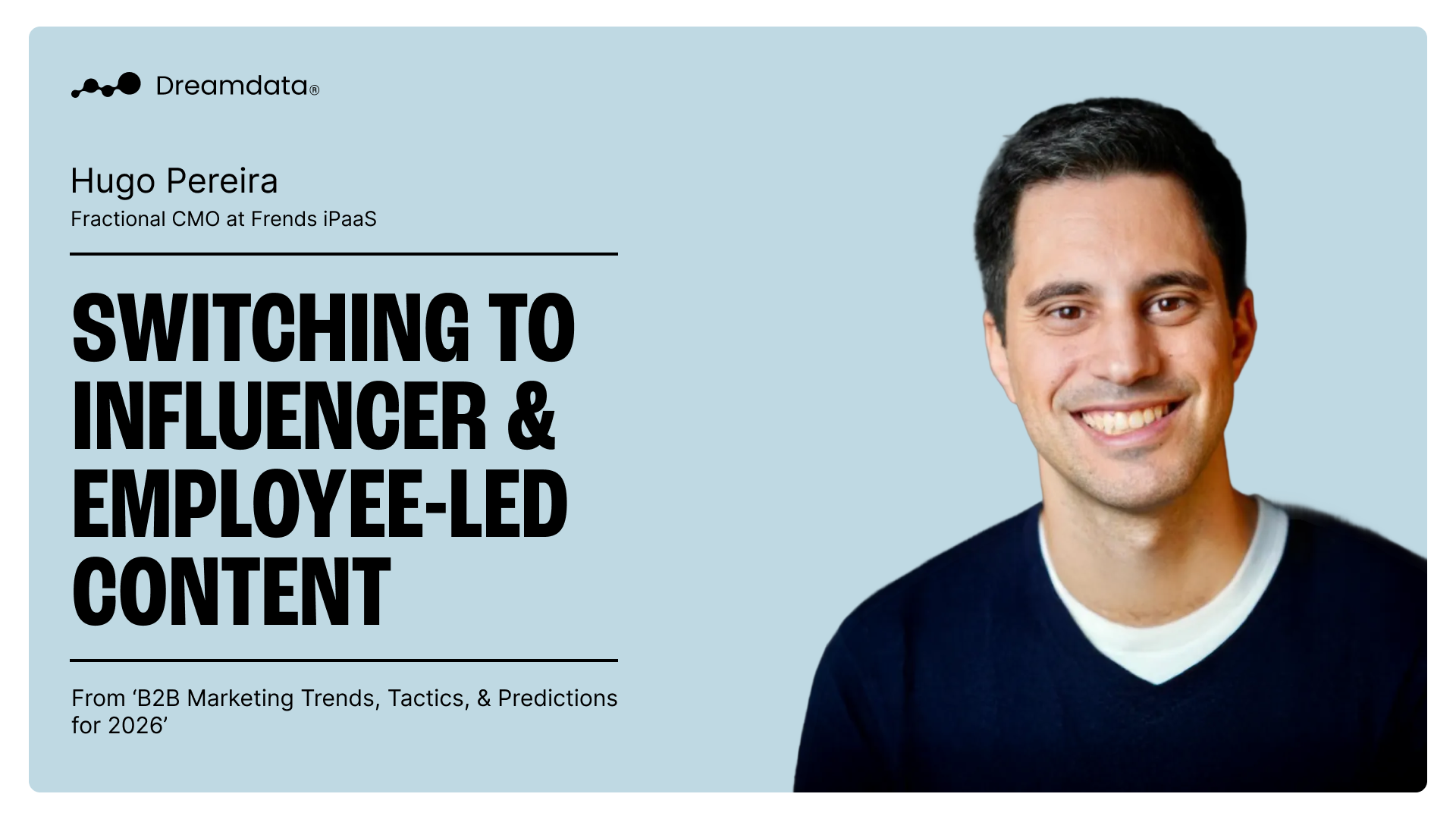
Hugo pointed to the importance of getting expert voices closer to the audience, especially those already in, or nearing, a buying window.
Audiences want to hear how practitioners think and react, not just what a product does. In practice, this looks like thought leader ads, employee-led content, or industry influencer partnerships that draw on relatability and prove credibility.
Increasingly, the panel predicts that paid media will be used to amplify human perspectives rather than corporate messaging. For example, putting paid spend behind thought leadership from founders and employees on platforms like LinkedIn, instead of defaulting to ads from company pages.
Trend 3: Search isn’t dying, intent is fragmenting
Despite the headlines, search isn’t dead.
The panel agreed that Google still dominates high-intent behavior. When buyers are ready to make a decision, traditional search remains central.
That view shows up in the data, too. Dreamdata’s 2025 Benchmarks Report found that 48% of B2B paid media budgets still go to the Google Network, a reminder that search dominates when intent is highest.
What has changed is everything that happens before a buyer is ready to make a decision.
Buyers now move through a wider set of surfaces early on. LLM results, Reddit communities, podcasts, and peer-to-peer conversations are now all part of how buyers learn and form early opinions. AI, specifically, has become a discovery layer that sits alongside other top of funnel content.
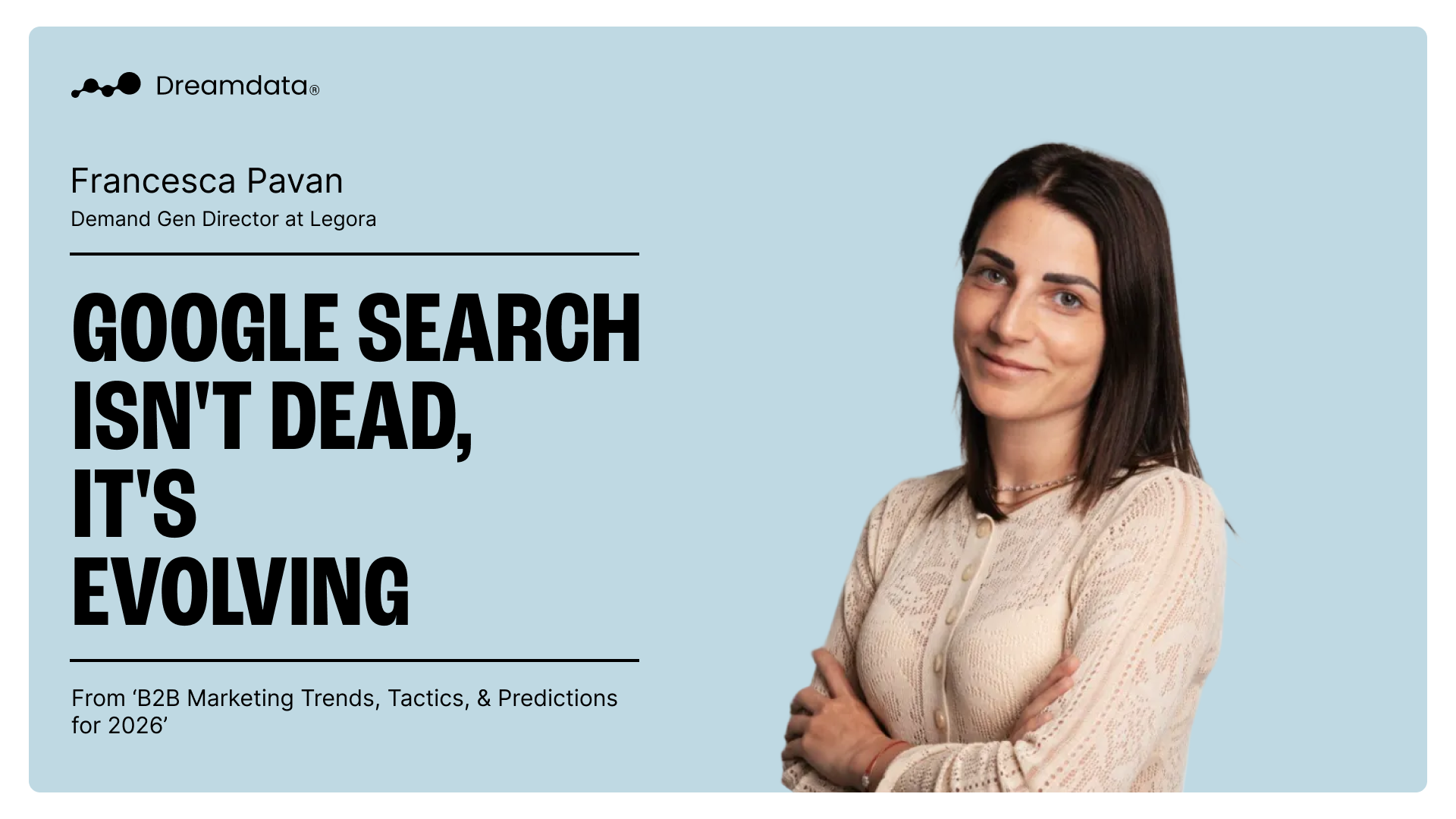
When discussing LLMs, Hugo explained that this shift raises a new question for marketers: which prompts do you actually want to own as a company? And do those prompts surface what makes you different from competitors?
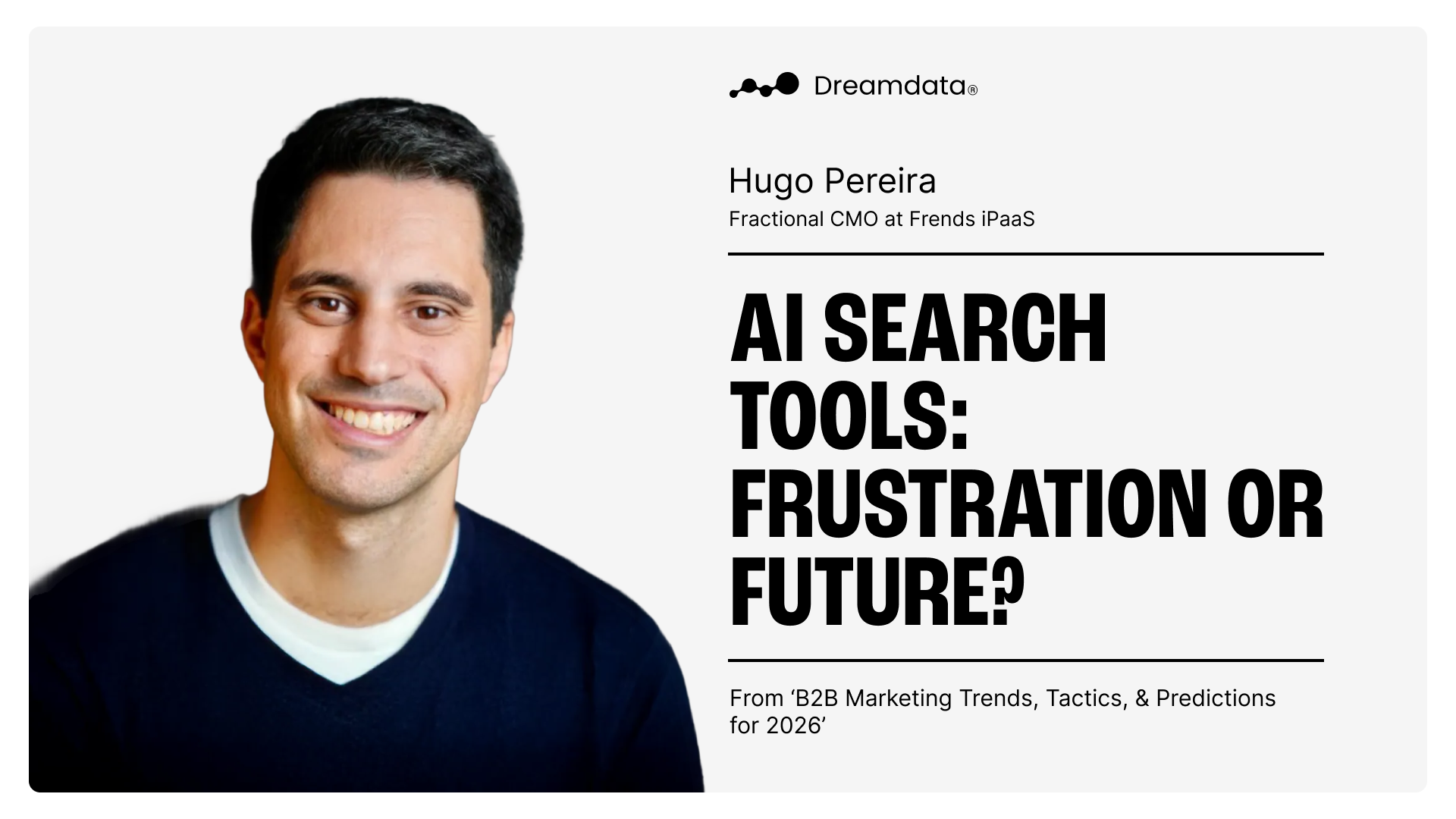
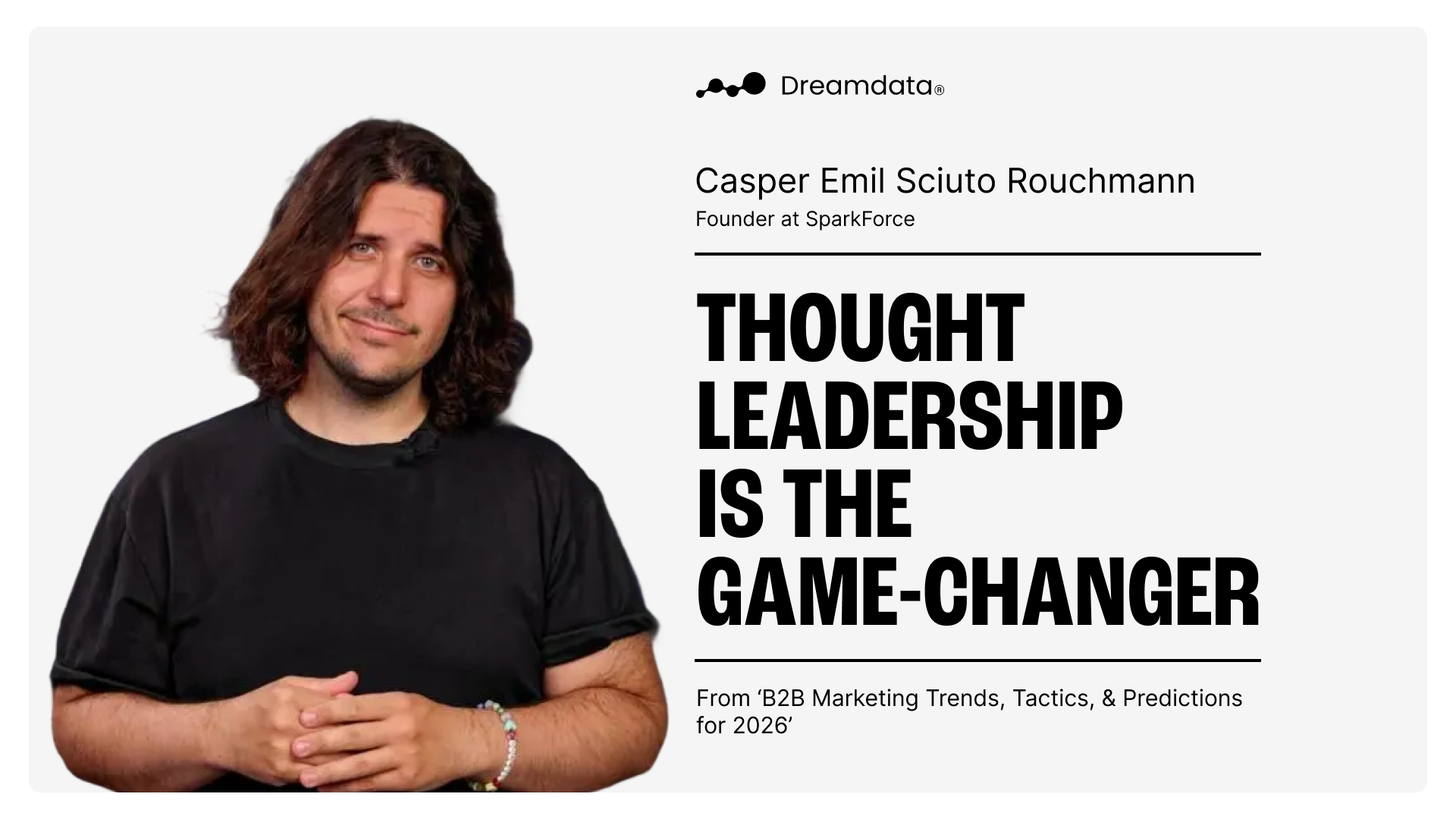
The panel was also careful to push back on overcorrection. Casper highlighted that AI-driven search relies heavily on context, which makes credibility and relevance more important than ever. That means fundamentals like PR initiatives and traditional link building still matter.
For marketers, the implication isn’t to completely abandon SEO or chase every new AI tool, but to understand where intent forms and which channels support each stage.
Trend 4: Human-centred beats AI-first
The panel didn’t frame 2026 as a rejection of AI.
Instead, it’s a return to human-centred marketing, with AI playing a supporting role.
Across the conversation, the panel described putting more emphasis on direct connection with their audience – using real voices, clear points of view, and interactions that don’t feel like automated GTM motions.
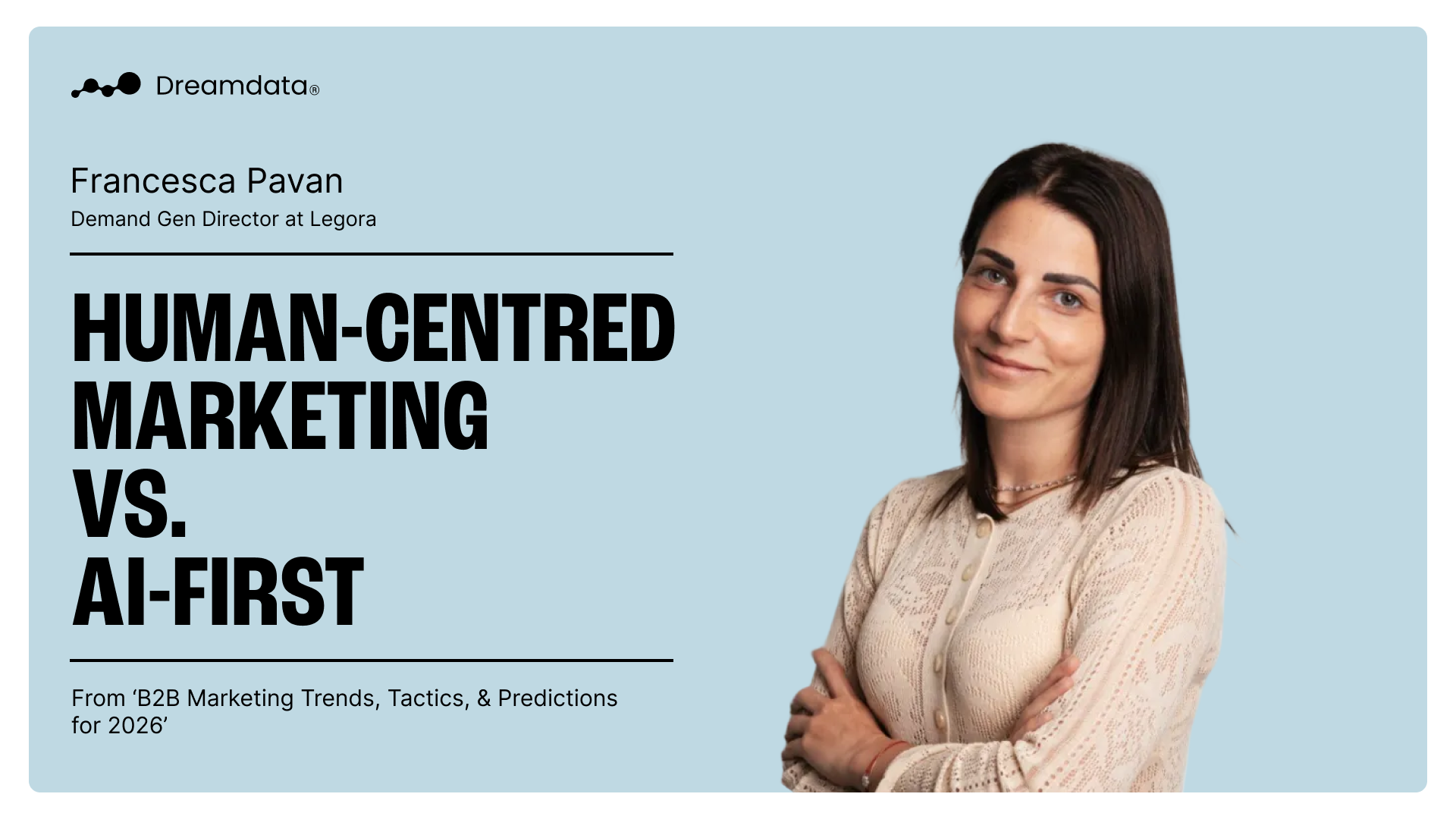
Francesca summed it up simply: “We’re not thinking AI-first. We’re thinking about the most compelling messages that will resonate with our audience. And if AI allows us to do that faster, by research or enrichment, great.”
A human-centred approach shows up most specifically in employee-led thought leadership and content that reflects lived experience rather than polished messaging. People want to hear from people, not products, which is why thought leader ads continue to perform so well.
Last year, our trends panel pointed to AI playing a bigger role in marketing.
This year, authenticity and the signal of “human-ness” becomes more valuable as content becomes easier to generate.
Trend 5: ICP and Positioning Matter More than Ever
Underlying every trend was a quieter but more fundamental shift: focus is becoming non-negotiable.
Across events, content, and distribution, the panel kept returning to the idea that without focus, everything breaks down. Whether it’s unclear positioning at scale or vague messaging across new channels, output doesn’t create signal if you don’t know who you’re talking to.
This might mean:
Choosing intimate formats over mass exposure
Prioritising relevance over reach
Accepting quieter dashboards in exchange for clearer outcomes
Focus is harder to sell internally though. And this is because smaller numbers look risky, especially when leadership is used to seeing volume. But, as the panel argued, learning and momentum happen faster when the scope is tighter and the audience is well-defined.

Casper put it plainly: “The thing that I see that’s missing the most is a clear ICP and clear positioning. You need to be super clear on who you’re talking to and why you’re interesting to them before anything else.”
Hugo reinforced this from an execution perspective, emphasizing the importance of committing to a single direction long enough to understand what’s actually working rather than constantly changing channels and messages in search of quick wins.
Clarity makes every other decision easier.
Conclusion
Across the panel, the message was consistent: 2026 will not be about chasing every new channel and tool.
Instead, marketers will focus on building direct connections with their audience, using real, relatable voices, and designing their marketing around progression rather than immediate conversion. Search will always matter when intent is high, but discovery is fragmenting.
As the pressure to do more with less builds, clarity becomes an advantage. Clear ICPs, clear positioning, clear signals of what progress actually looks like.
As content gets easier to produce and distribution gets noisier, the panel’s overarching advice is to stay close to your audience (resist the urge to hide behind volume!) and let relevance do the heavy lifting.
The conversation didn’t land on one new specific tactic or channel for 2026. Instead, the panel’s predictions pointed in a familiar direction.
About the speakers
Francesca is the Demand Generation Director at Legora, a rapidly growing AI-powered legal-tech company. She leads demand and growth initiatives with a focus on audience-first strategy and building engagement at scale.
Casper is the founder and CEO of SparkForce, a B2B marketing agency specializing in effective growth strategy, demand generation, and positioning. He has spent over a decade helping teams simplify their go-to-market and turn clarity into consistent growth.
Hugo is a marketing and GTM executive with 15 years of experience across B2B startups and scaleups. As a Fractional CMO, including his work with Frends iPaaS, he helps teams sharpen focus and build repeatable go-to-market execution.
