Why the “Funnel Mindset” is Costing B2Bs Revenue
TL;DR: The traditional sales funnel is failing; modern B2B growth relies on the Marketing Hourglass model, which prioritizes post-sale retention and uses AI to anticipate customer needs rather than just automating outreach.
Many B2B marketers pour resources into the top of the funnel, squeeze prospects through the middle, and the moment the contract is signed, move on to the next lead.
But according to John Jantsch, founder of Duct Tape Marketing, this approach is fundamentally flawed.
In a recent episode of the Attributed Podcast, we sat down with John to discuss why the traditional funnel is failing modern B2B companies, how AI is often being used for the wrong reasons, and why the real momentum for revenue growth happens after the sale.
Keep reading for the rundown on the new reality of the B2B customer journey, or listen to the entire conversation here.
The Dark Funnel is Growing
Before we talk about retention, we must acknowledge how the buying process itself has changed.
It is no longer a linear path guided by sales reps. It is a long, winding road of independent research.
Our own benchmarks reveal that the average B2B customer journey now lasts 272 days, and the vast majority of that time is spent without ever talking to you.
Stop Thinking Funnel and Start Thinking Hourglass
Because buyers are doing so much work on their own, the funnel model suggests that the relationship ends just as it’s getting started. John proposes the Marketing Hourglass.
The Hourglass acknowledges that after the pinch of the sale, the opportunity expands again. The stages aren't just Know, Like, Trust, Try, and Buy. They continue into Repeat and Refer.
If you treat the post-sale experience as an administrative task for the fulfillment department rather than a marketing priority, you are leaving revenue on the table.
Don’t Automate, Anticipate
There is a temptation among marketers to use AI to automate everything: spammy outreach, generic content creation, and robotic chatbots. John warns that this is a race to the bottom.
Instead of using AI to do more things faster, use it to segment and anticipate.
Automation should remove friction, but AI should add insight. If your automation makes you feel less human to your customer, you are using it wrong.
Trust is the New Premium
Trust has become the most valuable currency.
We have all received those personalized emails that were clearly written by a bot in two seconds. They destroy relationships.
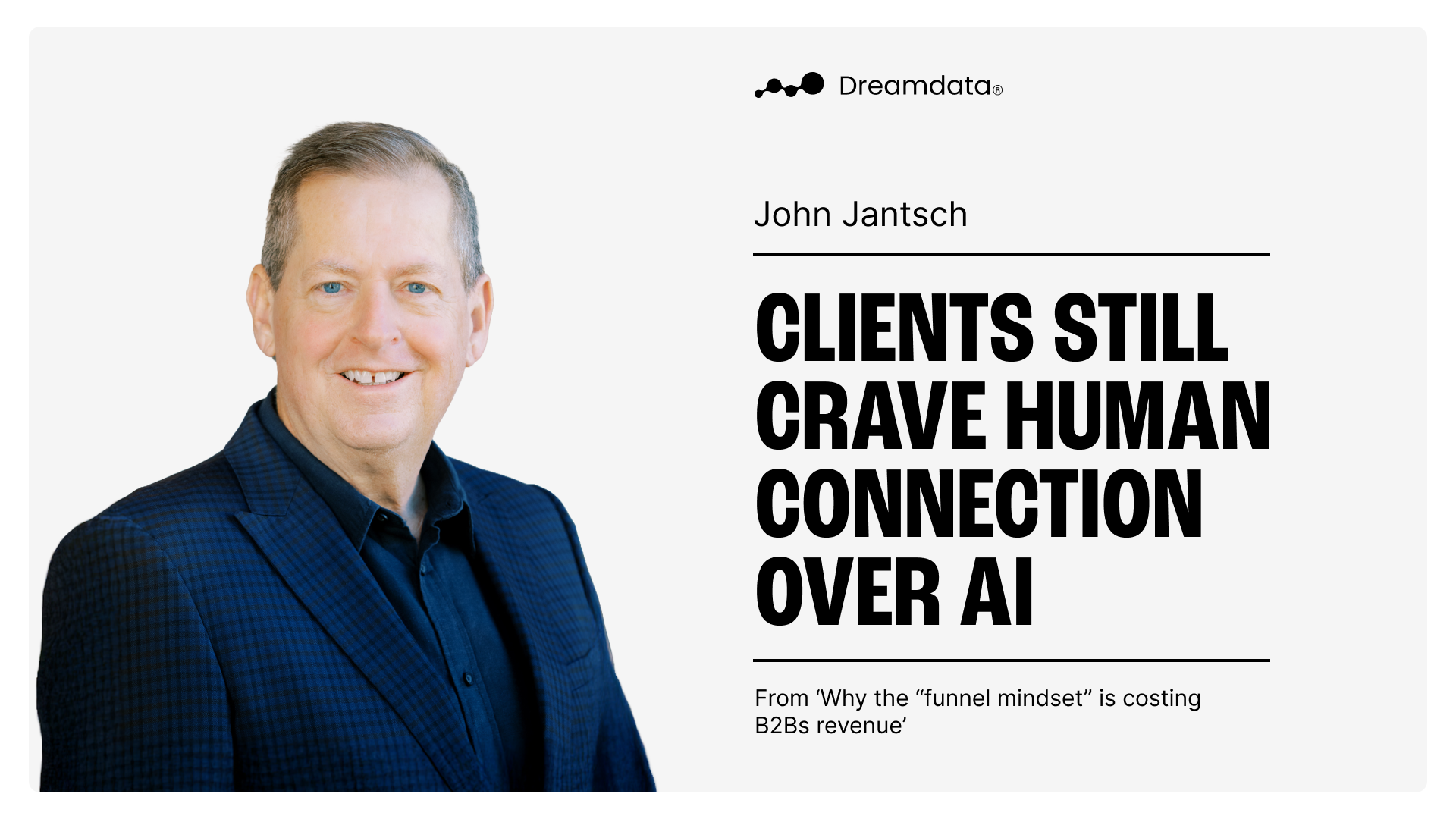
The danger of over-automating is actually devaluing your product. Even if the output is good, clients still crave the story and the human connection behind the work.
How to Fix Your Journey Today
If your organization is stuck in the Funnel mindset, here’s what John suggests you fix:
Get Leadership, Sales, Marketing, and Customer Success in the same room.
Ask the hard question: When the customer signs the contract, exactly what happens next?
Identify the drop-off, and you will likely find that everyone assumes someone else is handling the relationship building after the sale.
Systematize the check-in. Create a system where you contact clients every 60 to 90 days purely to add value or share education, not to ask for money.
Conclusion
The B2B companies that will win in the next decade aren't the ones with the loudest AI tools or the widest top-of-funnel reach. They will be the companies that view the sale not as the finish line, but as the entrance to the second, more profitable half of the journey.
About the Speaker
John Jantsch is a marketing consultant, speaker, and the founder of Duct Tape Marketing. For over 30 years, he has helped businesses build marketing strategies using his systematic framework. He is the author of the best-selling book Duct Tape Marketing and leads a network of over 500 licensed agencies around the world.