
The Marketing Science Behind Being Remembered in B2B
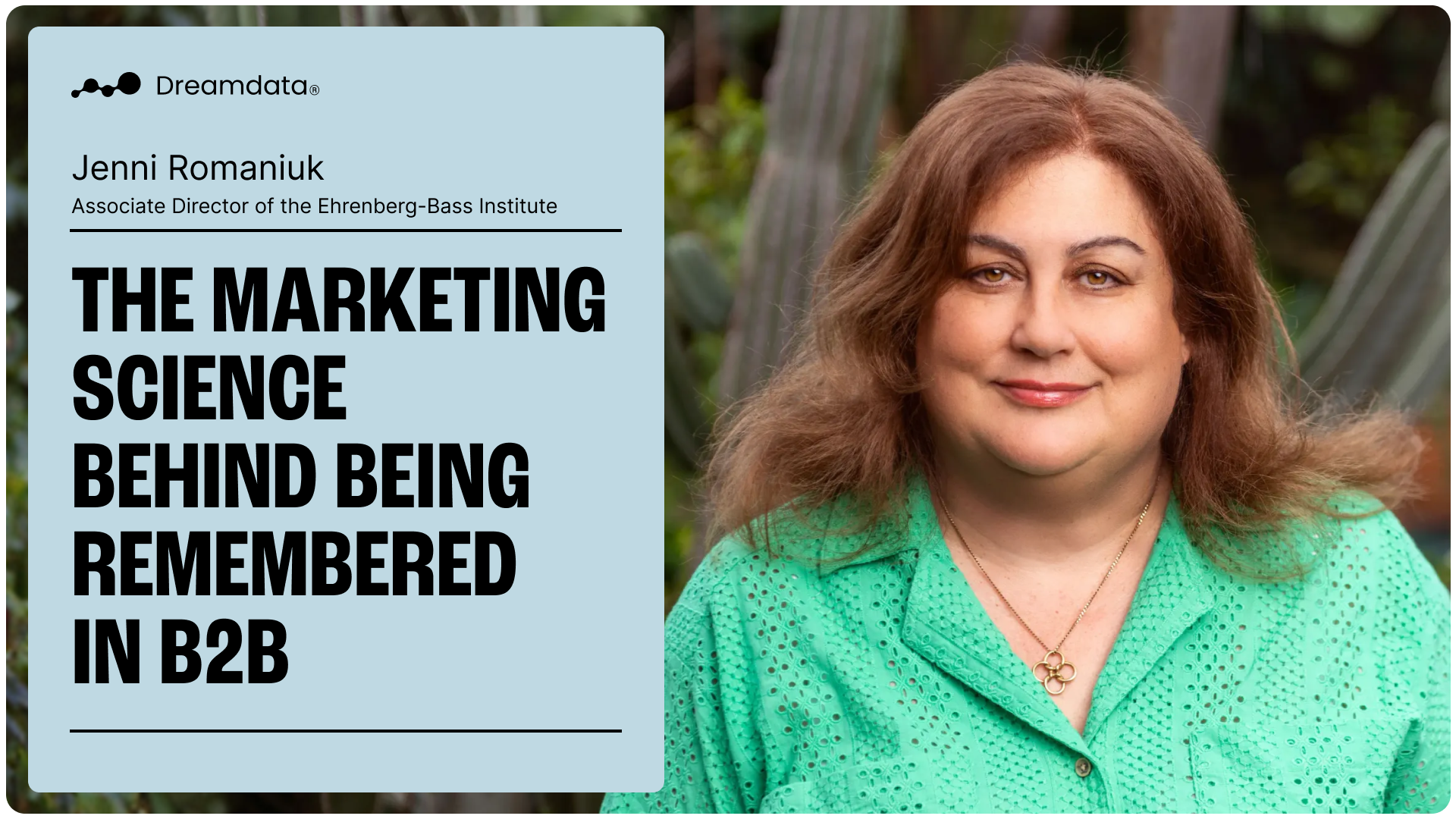
TL;DR: Your buyers don’t choose a solution from every available option, they choose from the brands they can remember. Growth happens when you build and refresh those memory links across buyers and buying situations before the sales window opens.
By the time a buyer books a demo, they’ve often spent months building associations and opinions about the brands they’re considering. They already know which names they recognize and which ones feel worth a closer look.
So, much of the work of getting remembered happens before buyers even start comparing solutions.
In a recent episode of the Attributed podcast, we sat down with Jenni Romaniuk, Research Professor and Associate Director of the Ehrenberg-Bass Institute, to look at the science behind how B2B brands get remembered and what it means for reach and consistency in practice.
You can also listen to the full conversation with Jenni here.
Your Buyers Aren’t Blank Slates
The B2B buying journey often gets defined by the moment a buyer raises their hand. From that point, they enter the funnel, consume content, and move toward a decision. Everything else is separate.
But memory doesn’t work that way.
Buyers form their impression of brands long before they’re actively evaluating solutions. They passively learn which brands belong in a category and what those brands are known for through social feeds, peer-to-peer conversations, podcasts, and events. By the time a buying window does open for them, that familiarity is already doing part of the work.
And these impressions don’t disappear after a purchase either.
They go quiet.
“If we don’t use our memories they’re not refreshed,” Jenni explains. “They decay over time.” Which might sound like bad news for marketers, but memory decay doesn’t mean starting over.
If your brand has reached a buyer before, the next interaction doesn’t start from zero. The memories are already there, they just need to be reactivated. As Jenni puts it: “once we’ve established a link in memory, it’s easier to refresh it. We don’t have to work as hard to do that [again].”

Looking into Memory Before Google
Which means that the buying journey doesn’t begin with search.
“A lot of the time, the first search engine we go to is our brain,” Jenni explains, “simply because it’s the easiest one for us to do.”
In other words, buyers look for answers in their existing knowledge before they go looking for new information. The VP of Marketing trying to prove ROI, the RevOps leader looking for better attribution, the finance team asking tougher questions about spend… before they search, they remember.
And if nothing comes to mind, only then do they move into active research on Google, an LLM, or through a trusted peer.

But, even while they’re researching, memory continues to shape the process.
As Jenni points out, familiarity influences what we pay attention to and what we ignore. We don’t click on the link in the top three results that means nothing to us, but we do look further into those names or logos that we recognize.
Which means buyers don’t enter a buying journey as a blank slate. By the time buyers start researching solutions, they already have a sense of which brands belong on their shortlist.
Being Retrieved Matters More Than Being First
How do you make sure buyers remember and retrieve your brand?
A lot of B2B brand strategy lands on one answer: be the first brand the buyer thinks of and own the category. But the research doesn’t support this as the goal.
“We remember multiple things at once,” Jenni explains. “There’s a little bit of a … myopathy where people constantly focus on ‘got to be top of mind’. Actually, you don’t have to be the first one retrieved, you just have to be retrieved.”

Buyers rarely evaluate every available option on the market. Instead, they find a small consideration set from memory (maybe two to four brands at most) and choose from that shortlist. In that case, being thought of first matters less than simply being included in that group.
The goal, instead, is to be remembered in more of the moments buyers are looking for a solution.
You Don’t Control How Buyers Find You
Buyers don’t remember brands in a vacuum.
They bring their own context to a buying decision: their specific problem, their team’s priorities, or the way an issue was described at a meeting that morning. Jenni refers to these as category entry points, the triggers that prompt buyers to start looking for a solution.
You can influence the buying situations you want to be associated with, but you can’t control which cues buyers ultimately use.
For marketers, the challenge is that most brands only get remembered for one or two buyer needs. Outside of those moments, they’re effectively invisible. That’s why Jenni describes it as a breadth problem: a brand with weaker associations across many buyer triggers will consistently outperform a brand with one very strong association.
In other words, being remembered for more buyer needs matters more than dominating a single one. Growth comes from showing up in more moments buyers start looking for a solution, not from owning a single problem.
Which is why “owning “ a category entry point is harder than it sounds. The needs that matter most are usually associated with multiple brands, so you’re competing to be one of the few options buyers remember.
“You can’t avoid mental competition,” Jenni says. “You’ve just got to be better at it.”
Practically, it’s moving away from “how do we own this space?” and toward “how do we become relevant in more of the moments buyers start looking for a solution?”
Count Brains, Not Companies
Building memory across more buyer needs starts with reaching more of the people involved in the decision.
Within any account, multiple people are involved in evaluating and selecting a solution.
There are 10 stakeholders involved in B2B deals on average. That’s multiple budget holders, influencers, champions, and decision-makers who may all have an opinion when a vendor’s name comes up.
And each one is a separate brain that needs to have heard of you.
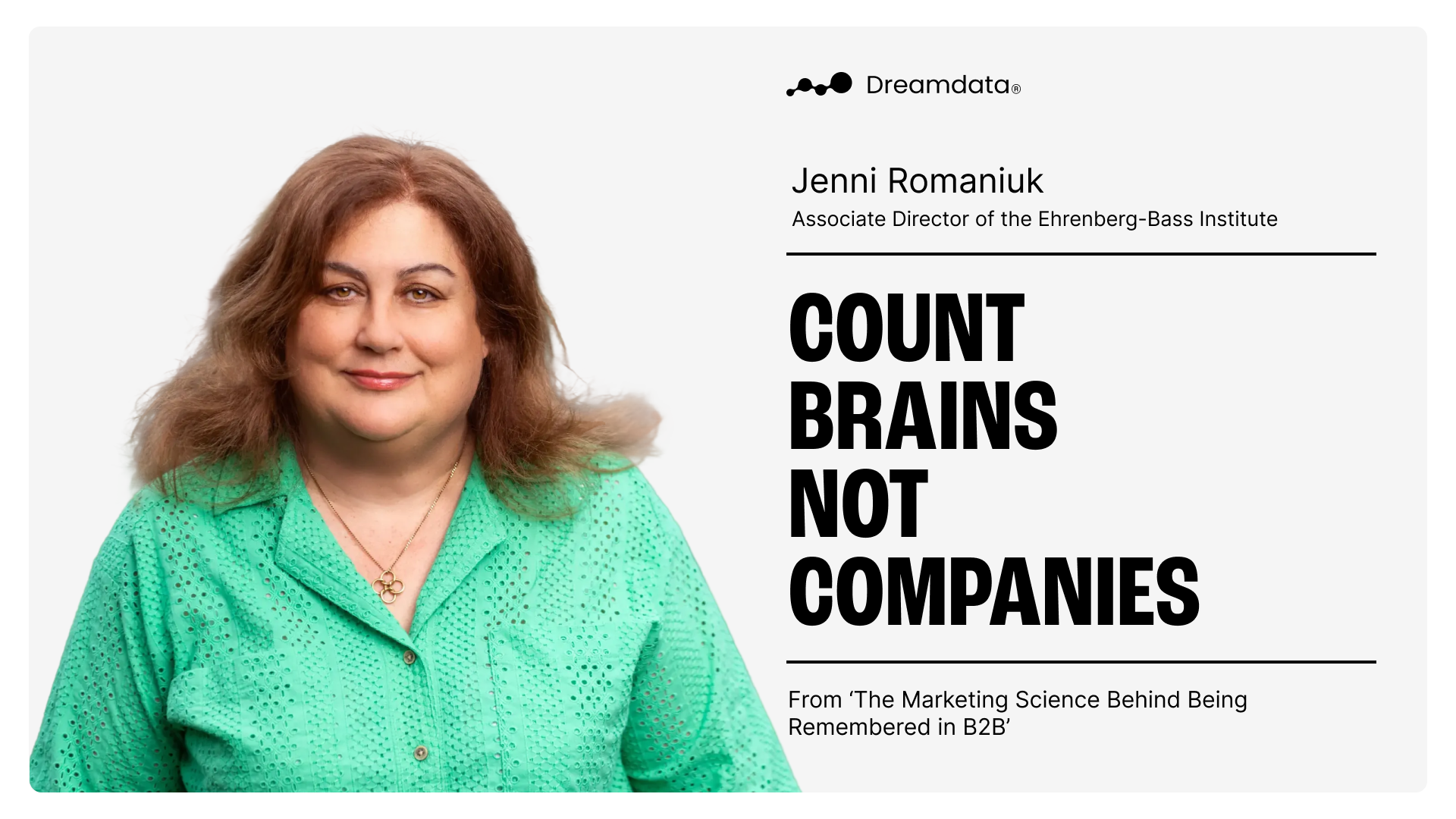
“Count brains, not companies,” Jenni argues. “Even within a company, there might be two decision makers. That’s two brains you want to influence.” If being remembered is the goal, then broad reach becomes an advantage. The more people who recognize your brand when a buying window opens, the more likely you are to make the shortlist.
This is where we should keep John Dawes’ 95:5 rule in mind as well.
In any given period, only a small percentage of your potential buyers are actively in-market. The other vast majority aren’t buying right now, but they will be eventually.
And those future buyers aren’t waiting in a nurture sequence. They’re absorbing things passively: scrolling through LinkedIn, attending events, listening to podcasts. Ultimately, they’re building the memories that they’ll rely on later when a buying window does appear.
Those future buying moments are impossible to predict, but the opportunity to build memory and reach the people who will be ready tomorrow is always there.
Conclusion
Jenni’s research challenges one of the most common assumptions about B2B marketing: that persuasion only happens during the buying journey.
By the time buyers actually enter the market, most of the work has already been done. They’ve built memories and have started narrowing down their options long before they visit a pricing page or book a demo.
Demand capture still matters. But growth depends on reaching a much larger group of buyers who aren’t ready yet, so your brand is one of the few they remember when they are.
About the Speaker
Jenni Romaniuk is Research Profession and Associate Director at the Ehrenberg-Bass Institute for Marketing Science at Adelaide University. She has spent decades studying how brands grow and how buyers make decisions, with a particular focus on mental availability, category entry points, and distinctive brand assets.
She is also the author of Better Brand Health and Building Distinctive Brand Assets, and co-author of How Brands Grow Part 2.
